
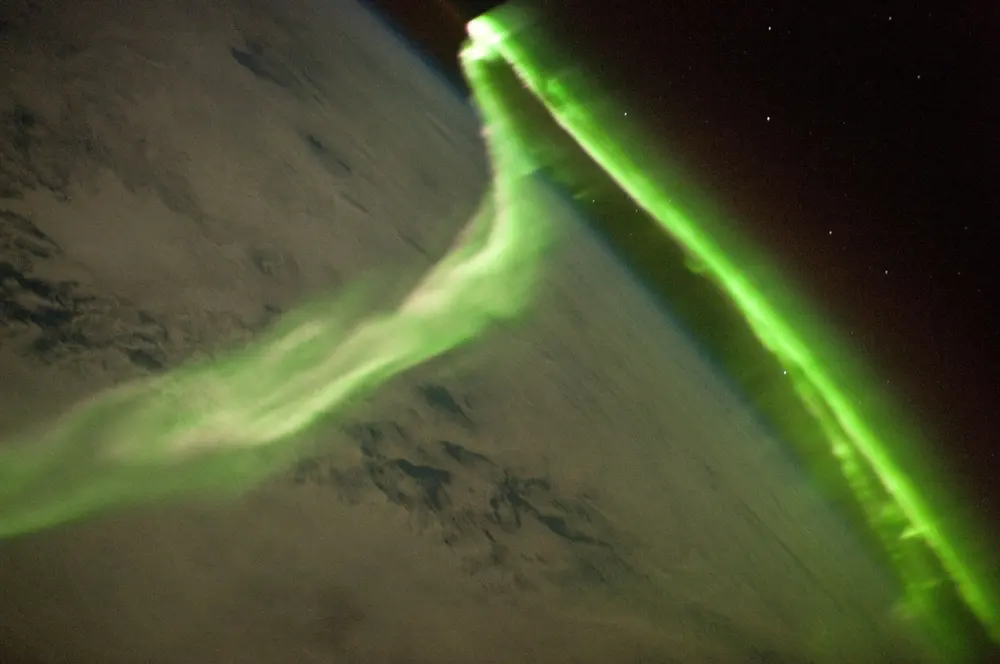
Auroras are glowing displays in Earth’s upper atmosphere. In the Northern Hemisphere they are called aurora borealis, or northern lights, while in the Southern Hemisphere they are called aurora australis, or southern lights.
Where auroras begin
Auroras begin with the Sun. The Sun continuously releases charged particles in the solar wind. Solar flares and coronal mass ejections can intensify conditions in near-Earth space and help trigger stronger geomagnetic activity.
Earth's magnetic field does the guiding
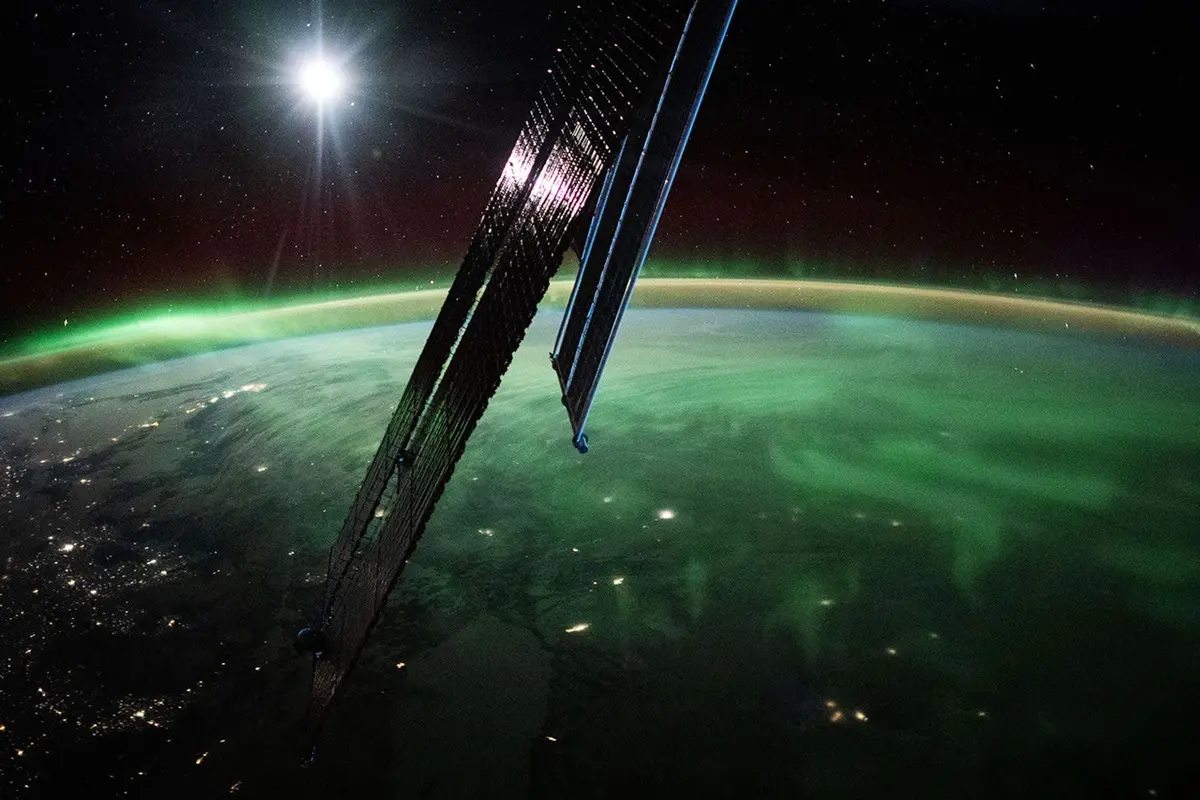
Earth’s magnetic field deflects much of the charged-particle flow, but energetic particles can be guided toward the polar regions. When they enter the upper atmosphere, they collide with oxygen and nitrogen atoms and molecules.
Those collisions transfer energy to atmospheric gases. When the gases release that energy, they emit light.
Why auroras have different colors
Green is the most common auroral color and is usually associated with excited oxygen at particular altitudes. Higher-altitude oxygen can produce red light, while nitrogen can contribute blue, purple and pink shades.
The exact color depends on altitude, atmospheric composition and the energy of the incoming particles.
Why auroras are usually seen near the poles
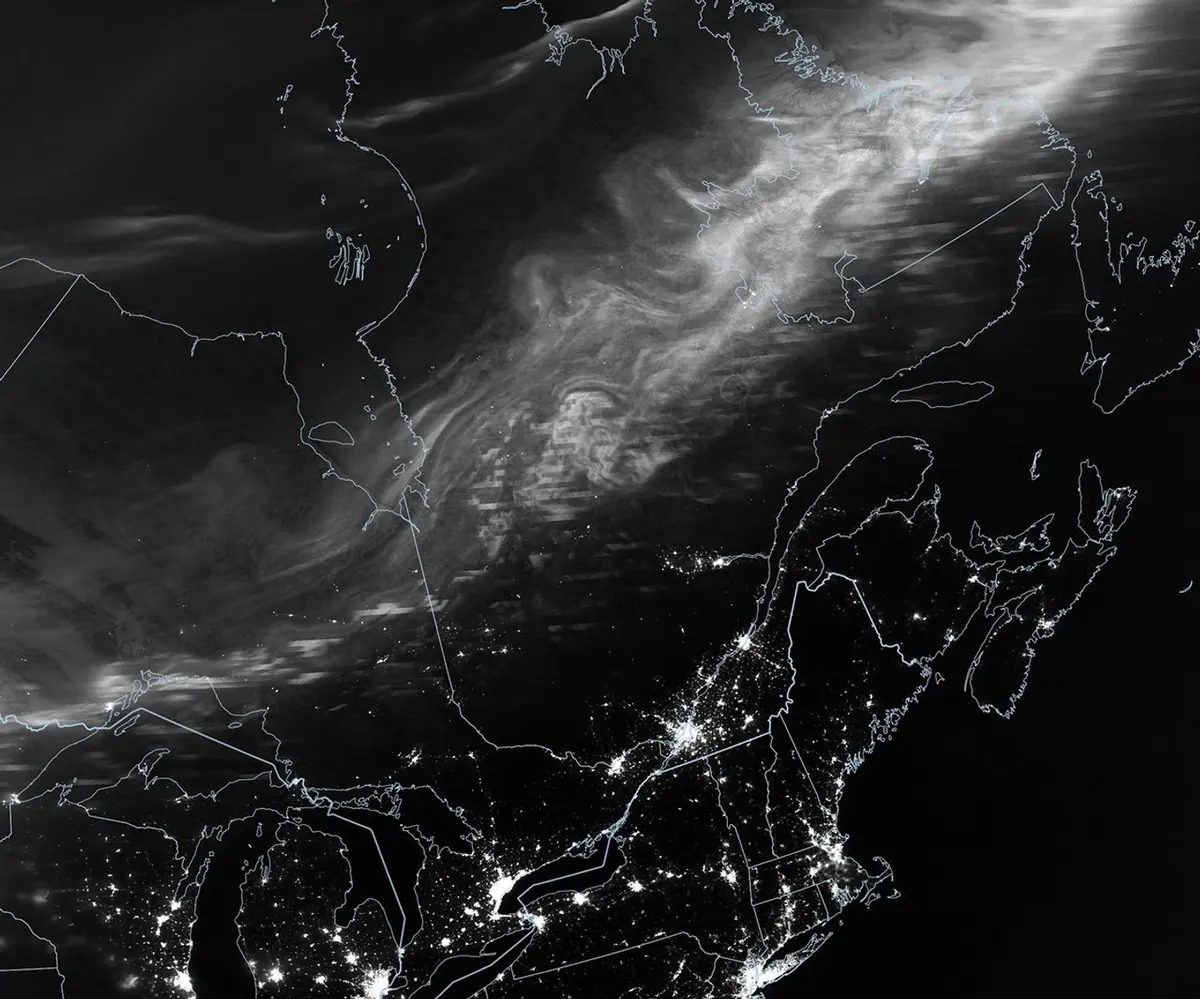
Earth’s magnetic field funnels charged particles toward high latitudes, forming auroral ovals around the magnetic poles. During stronger geomagnetic storms, those ovals can expand and auroras may become visible much farther from the poles.
Can auroras affect technology?
The lights themselves are not the main technological hazard, but the same space-weather disturbances that create intense auroras can affect radio communications, navigation systems, satellites and, in severe cases, electrical grids.
FAQ
Are northern and southern lights the same phenomenon?
Yes. Aurora borealis occurs in the north and aurora australis in the south, but both are produced by the same basic Sun–Earth interaction.
Why is green the most common aurora color?
Green light is commonly emitted by excited oxygen at altitudes where many visible auroras form.
Can auroras appear far from the poles?
Yes. Strong geomagnetic storms can expand the auroral ovals toward lower latitudes.