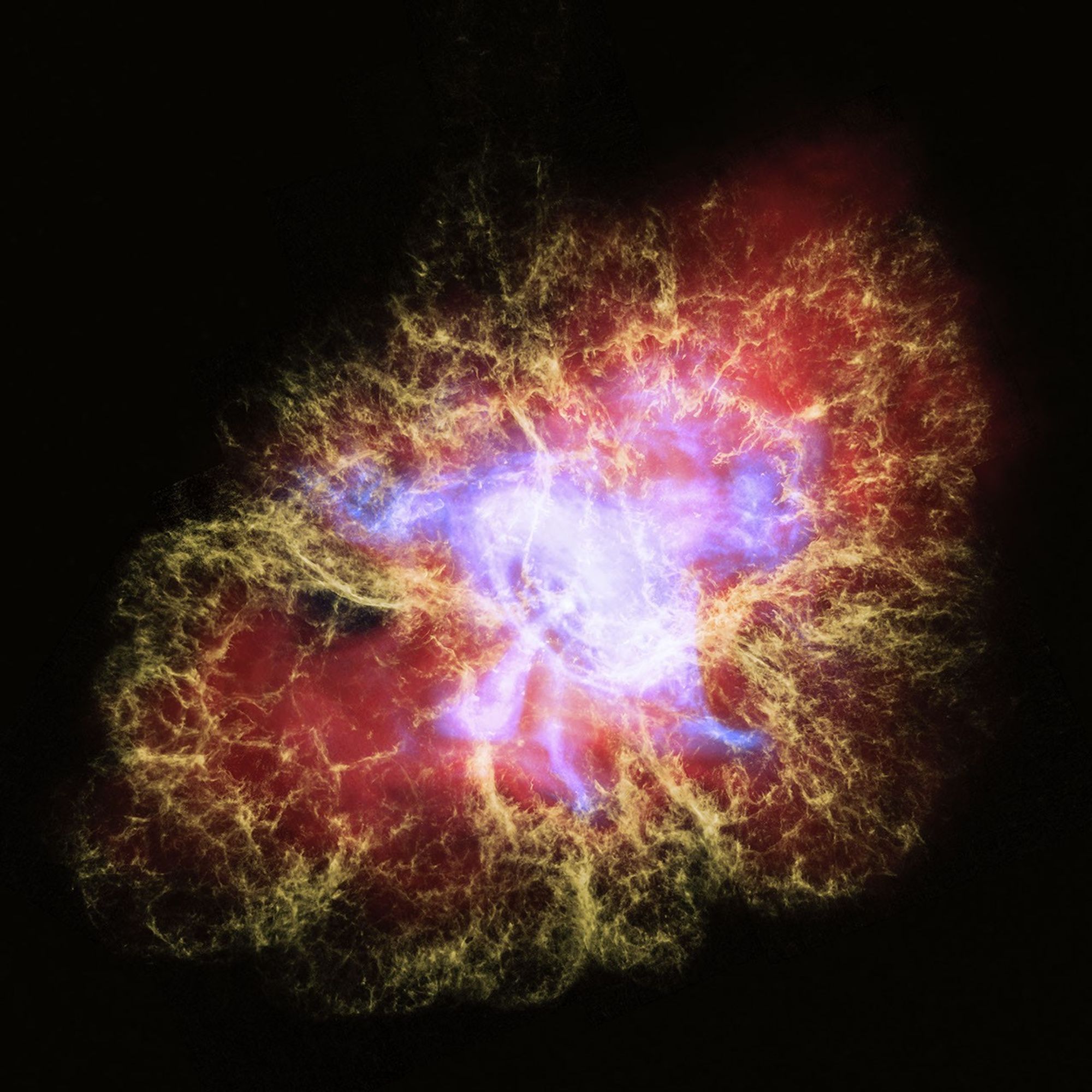
A neutron star is the collapsed core left behind when certain massive stars explode as supernovae. It packs more mass than the Sun into an object only about the size of a city, creating densities and magnetic fields that cannot be reproduced on Earth.
Some neutron stars are also pulsars. They rotate rapidly and send beams of radiation into space. When a beam sweeps across Earth, astronomers detect a repeating pulse, much like seeing the flash of a lighthouse as its beam turns.
What is a neutron star?
When a massive star exhausts its nuclear fuel, its core can collapse during a supernova. Under the enormous pressure, protons and electrons are driven together and the remnant becomes dominated by neutrons.
The result is a compact object with extraordinary gravity. The outer layers are only kilometers from the center, yet the star can contain more mass than the Sun.
Why neutron stars are so dense
Neutron stars are among the densest known forms of matter outside black holes. Their interiors are compressed so strongly that familiar atomic structure no longer survives in the usual way.
A tiny amount of neutron-star material would have an enormous mass on Earth. Scientists study neutron-star masses and radii because those measurements help constrain how matter behaves at pressures far beyond laboratory conditions.
What makes a pulsar pulse?
A pulsar is a rotating neutron star whose magnetic axis is not perfectly aligned with its rotation axis. Charged particles are accelerated along magnetic field lines and can produce beams of radiation near the magnetic poles.
As the star spins, those beams sweep across space. If Earth lies in the beam path, telescopes record a pulse every time the beam points toward us. Some pulsars spin many times each second.
Magnetic fields and hot spots
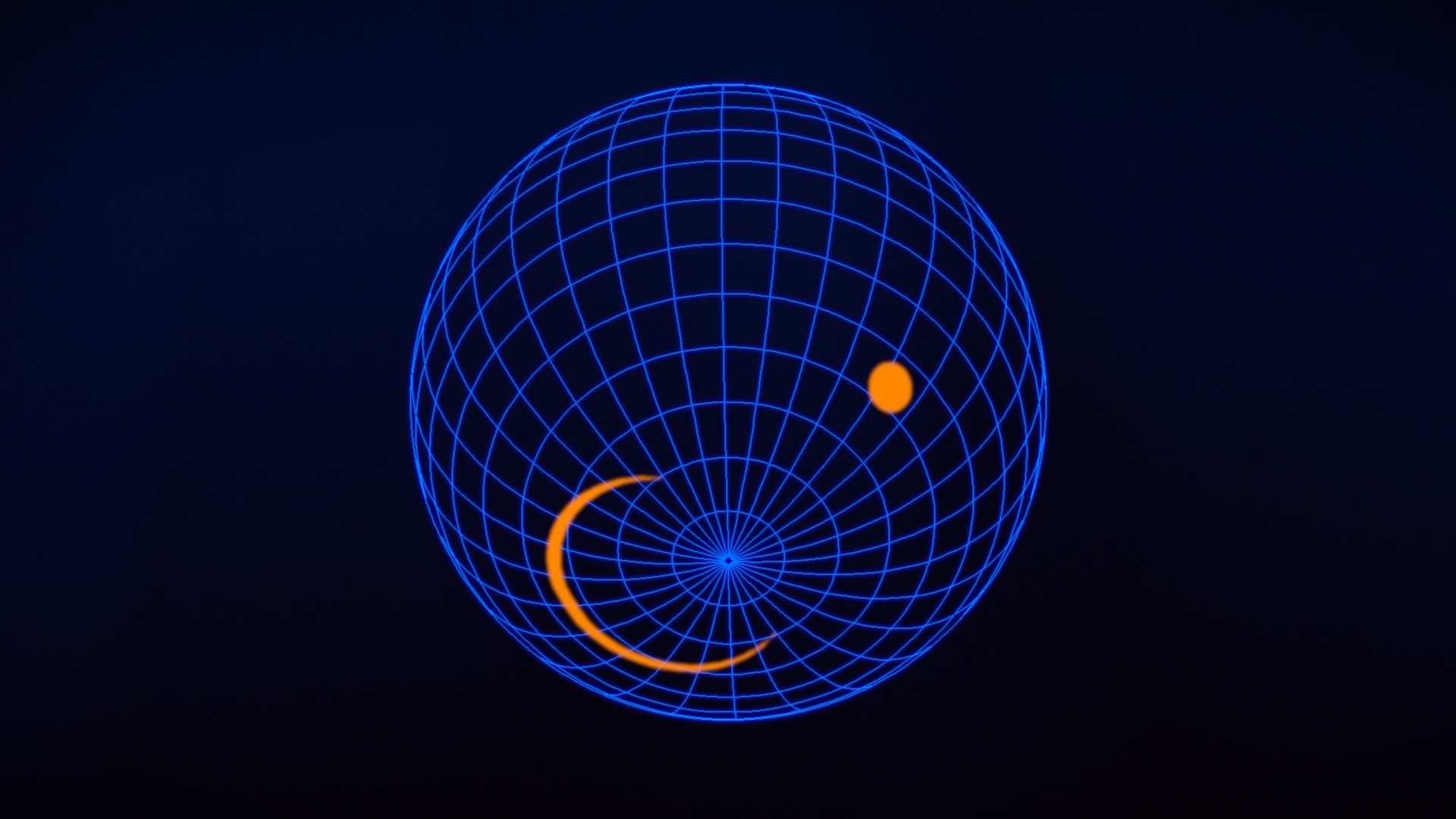
Neutron stars can have magnetic fields billions or trillions of times stronger than Earth’s. These fields channel particles and help create high-energy X-rays, gamma rays and radio emission.
NASA’s NICER instrument on the International Space Station has measured neutron-star sizes and mapped hot regions on their surfaces. Those hot spots are shaped by magnetic-field geometry and help astronomers understand how pulsars produce their radiation.
Pulsars moving through space
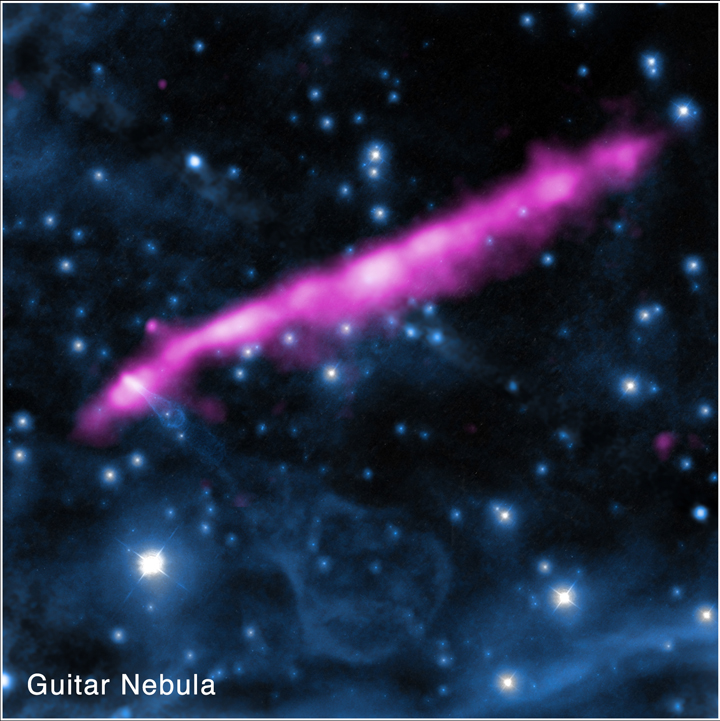
Some neutron stars receive a powerful “kick” during the supernova that forms them. They can then travel rapidly through interstellar gas, producing bow shocks and pulsar-wind nebulae.
The Guitar Nebula is a dramatic example. Its pulsar races through space while energetic particles create a long X-ray filament and a distinctive optical structure around the star.
FAQ
Is every neutron star a pulsar?
No. A pulsar is a neutron star whose beams and viewing geometry allow us to detect regular pulses. Some neutron stars may not beam toward Earth or may not produce strong detectable pulses.
How fast can pulsars spin?
Some pulsars rotate dozens, hundreds, or even more times each second. Millisecond pulsars are the fastest-known class.
What is inside a neutron star?
The exact structure is still an active research question. Scientists use mass, radius, timing and X-ray measurements to test competing models of ultra-dense matter.