Quasars Explained: The Brightest Beacons in the Early Universe
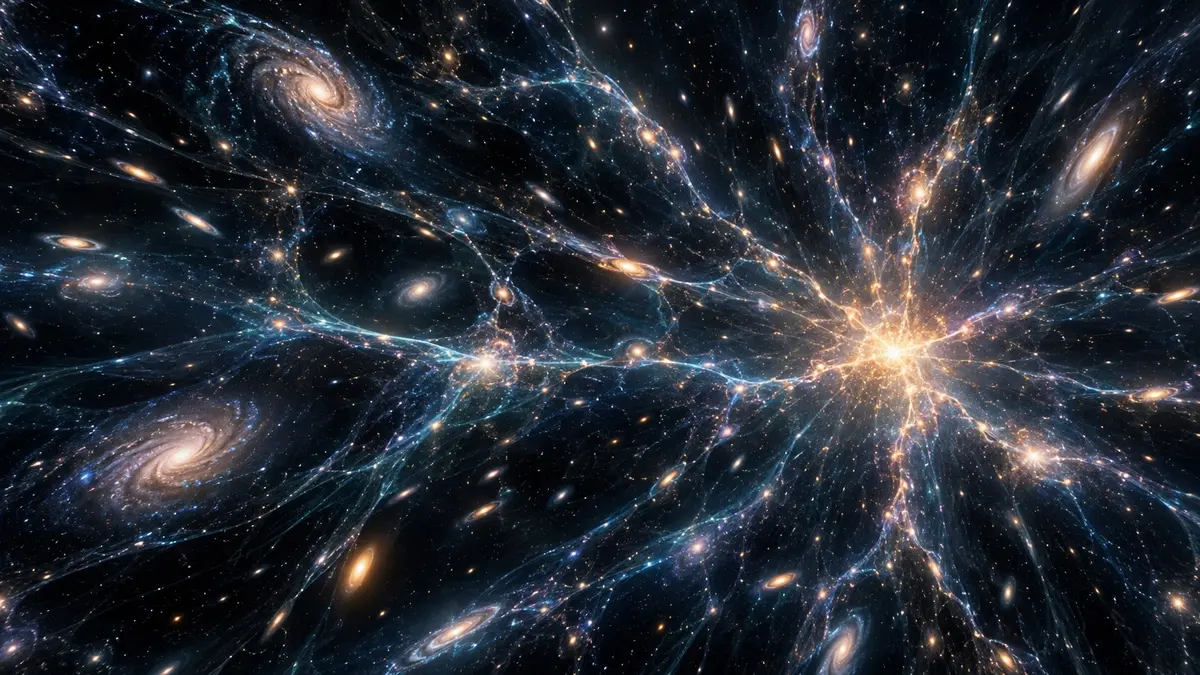
A simple guide to quasars, supermassive black holes, and why these distant objects can outshine entire galaxies.
What is a quasar?
A quasar is an extremely bright object powered by matter falling toward a supermassive black hole at the center of a galaxy. The black hole itself does not shine, but the gas and dust around it can become incredibly hot before crossing the event horizon. That hot material produces intense radiation across many wavelengths.
Why are quasars so bright?
The energy comes from gravity. Material spiraling toward a black hole forms a rapidly rotating disk. Friction and compression heat that disk to extraordinary temperatures. In active systems, this process can release more light than all the stars in the host galaxy combined.
Why do we see many distant quasars?
Quasars were more common when the universe was younger. Looking at very distant quasars means looking back in time because their light took billions of years to reach Earth. They therefore give astronomers a window into early galaxy growth.
What can quasars tell us?
Quasars act like bright background lamps. By studying how their light changes as it travels through gas between galaxies, astronomers can learn about distant matter that would otherwise be difficult to observe.
Are quasars dangerous to us?
The known quasars are extremely far away, so they pose no threat to Earth. Their importance is scientific: they reveal how black holes grow, how galaxies evolve, and what the young universe was like.