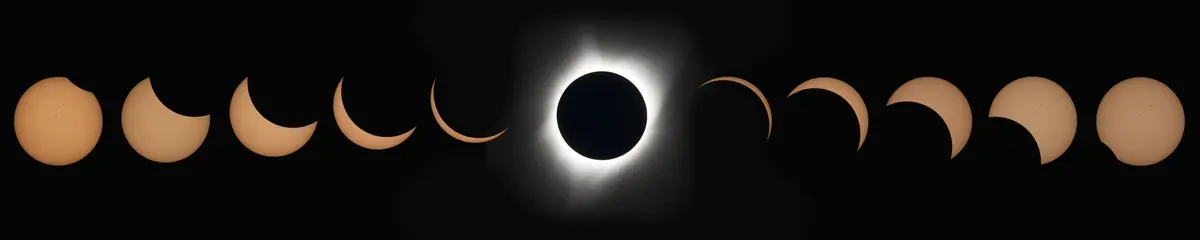
A solar eclipse happens when the Moon passes between Earth and the Sun and blocks some or all of the Sun’s bright surface from our point of view. Because the Moon is much smaller than the Sun but also much closer to Earth, the two can appear almost the same size in our sky.
For observers inside the narrow path of a total solar eclipse, the Moon can completely cover the Sun’s visible disk for a short time. Outside that path, people may see a partial eclipse instead.
How a solar eclipse happens
The Moon orbits Earth roughly once every month, but its orbit is tilted by about five degrees relative to Earth’s orbit around the Sun. Most months, the Moon passes slightly above or below the Sun in our sky.
An eclipse can occur when the Moon is near one of the points where its tilted orbit crosses Earth’s orbital plane and the Sun, Moon and Earth line up closely enough.
Total, partial, and annular eclipses
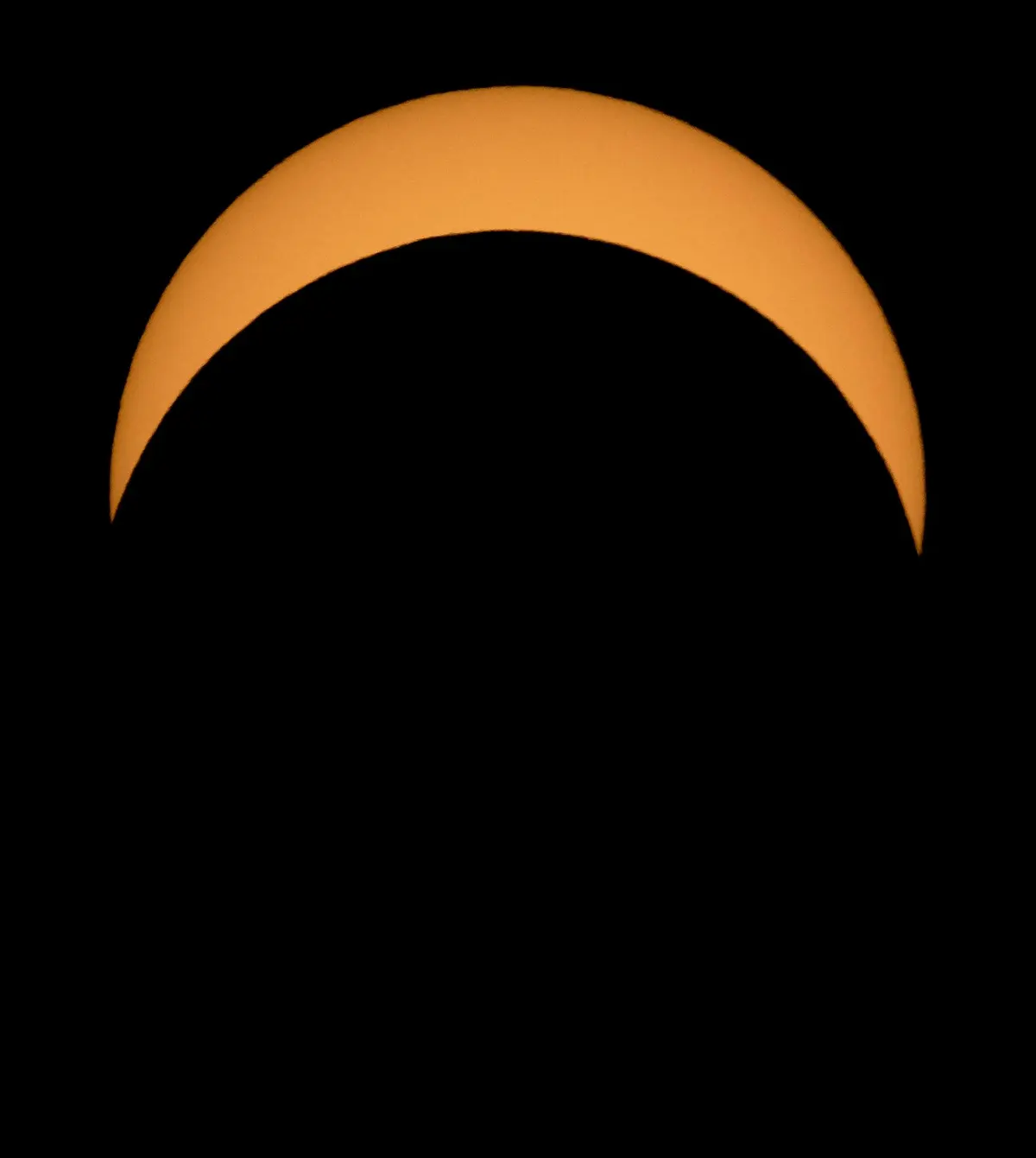
In a total solar eclipse, the Moon completely covers the Sun’s bright photosphere for observers inside the path of totality. In a partial eclipse, only part of the Sun is covered.
An annular eclipse happens when the Moon is farther from Earth and appears slightly smaller than the Sun, leaving a bright ring — or annulus — around the Moon.
What happens during totality
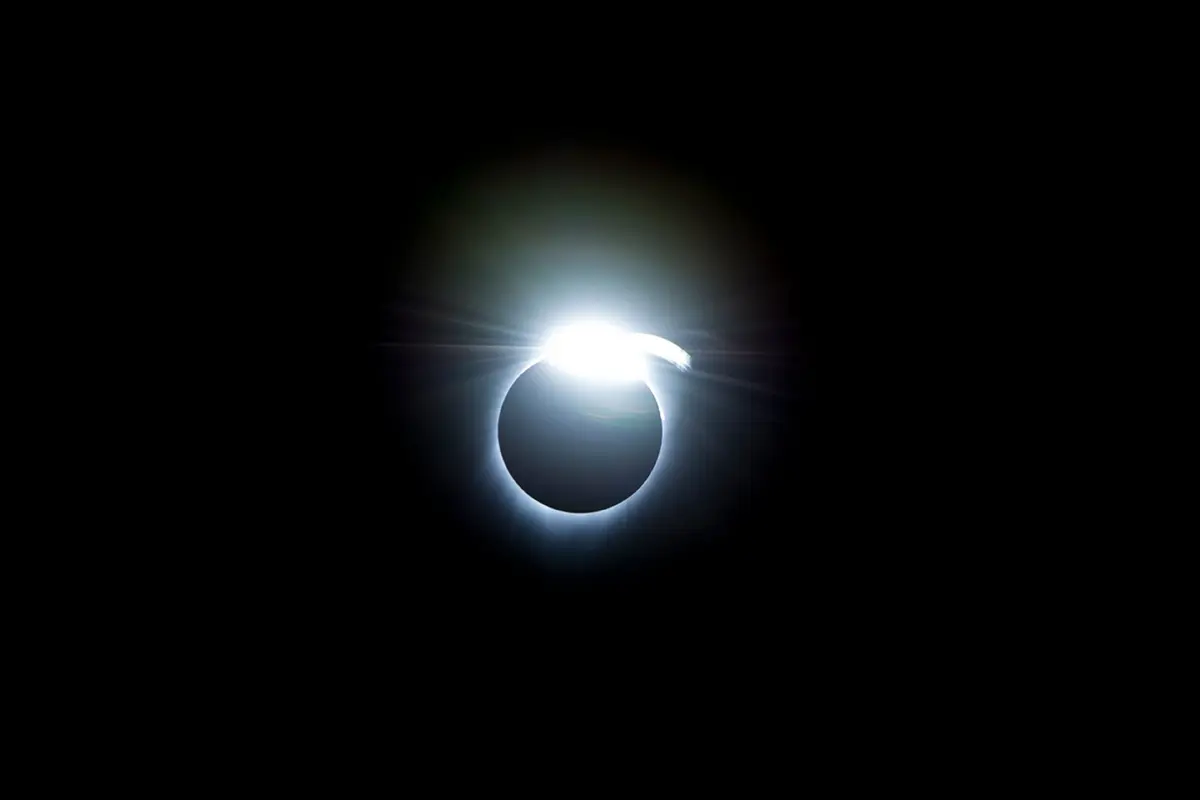
As totality approaches, daylight dims rapidly, temperatures can drop, and the sky takes on a twilight appearance. When the Sun’s bright surface is completely covered, the solar corona becomes visible around the dark silhouette of the Moon.
Observers may also see bright prominences near the Sun’s edge and stars or planets in the darkened sky. Totality usually lasts only a few minutes from one location.
How to watch a solar eclipse safely
Looking directly at the Sun without proper protection can permanently damage the eyes. During partial phases, viewers should use certified eclipse glasses or an approved solar viewer that meets the ISO 12312-2 standard.
Regular sunglasses are not safe for direct solar viewing. Cameras, binoculars and telescopes also need proper solar filters placed over the front of the optics. During a total solar eclipse, eye protection may be removed only during the brief period when the Sun is completely covered, and it must go back on as soon as the bright photosphere begins to reappear.
Why eclipses do not happen every month
The Moon’s orbit is tilted relative to Earth’s orbit around the Sun, so most new moons pass above or below the Sun from our viewpoint. Eclipses happen only during special alignment periods called eclipse seasons.
Even when a solar eclipse occurs, the Moon’s darkest central shadow crosses only a narrow portion of Earth. That is why total solar eclipses are rare from any single location even though solar eclipses happen somewhere on Earth every year or two.
FAQ
Can I look at a solar eclipse through sunglasses?
No. Ordinary sunglasses do not provide enough protection for direct solar viewing. Use certified eclipse glasses or another approved solar viewer.
Why can I look during totality?
During a total solar eclipse, the Moon completely blocks the Sun’s bright visible surface. Eye protection may be removed only during that brief fully covered phase and must be replaced immediately when bright sunlight returns.
How long does a total solar eclipse last?
Totality from one location usually lasts only a few minutes, although the partial phases before and after can last much longer.