
The small constellation Triangulum contains one of the most important nearby spiral galaxies. Messier 33 is seen nearly face-on, giving astronomers a clear look at its spiral structure and star-forming regions.
Because M33 is close by on a cosmic scale, its stars and nebulae can be studied in exceptional detail. It has also played an important role in measuring the distance scale of the universe.
Where the Triangulum Galaxy fits in the Local Group
M33 is the third-largest galaxy in the Local Group after Andromeda and the Milky Way. It lies roughly 3 million light-years from us.
Why its spiral arms look so active
Blue star clusters and pinkish glowing nebulae trace active star formation along M33’s loosely wound spiral arms.

NGC 604 is a giant stellar nursery
NGC 604 is one of the largest known star-forming regions in the Local Group and stands out prominently in images of M33.
How Hubble resolved millions of stars
Hubble mosaics of M33 have resolved tens of millions of individual stars, allowing astronomers to compare stellar populations across the galaxy.
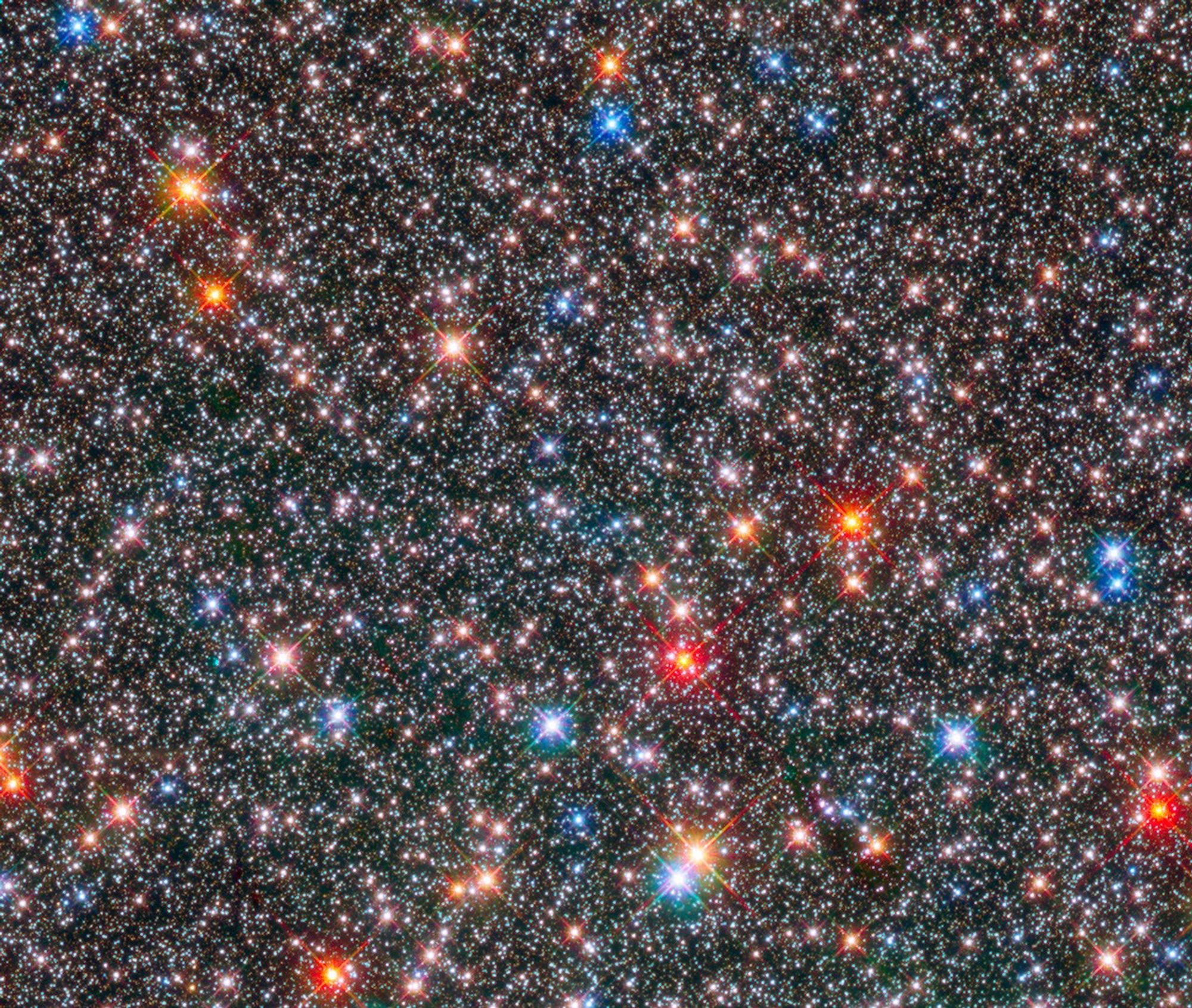
Why variable stars in M33 are important
Well-measured variable stars have helped astronomers determine the galaxy’s distance, making M33 part of the ladder used to establish cosmic distances.
FAQ
Is M33 part of the Milky Way?
No. It is a separate spiral galaxy in the Local Group.
How far away is it?
About 3 million light-years.
Can M33 be seen without a telescope?
Under exceptionally dark and clear skies, experienced observers can sometimes detect it with the unaided eye.
What is NGC 604?
A huge star-forming region inside one of M33’s spiral arms.