
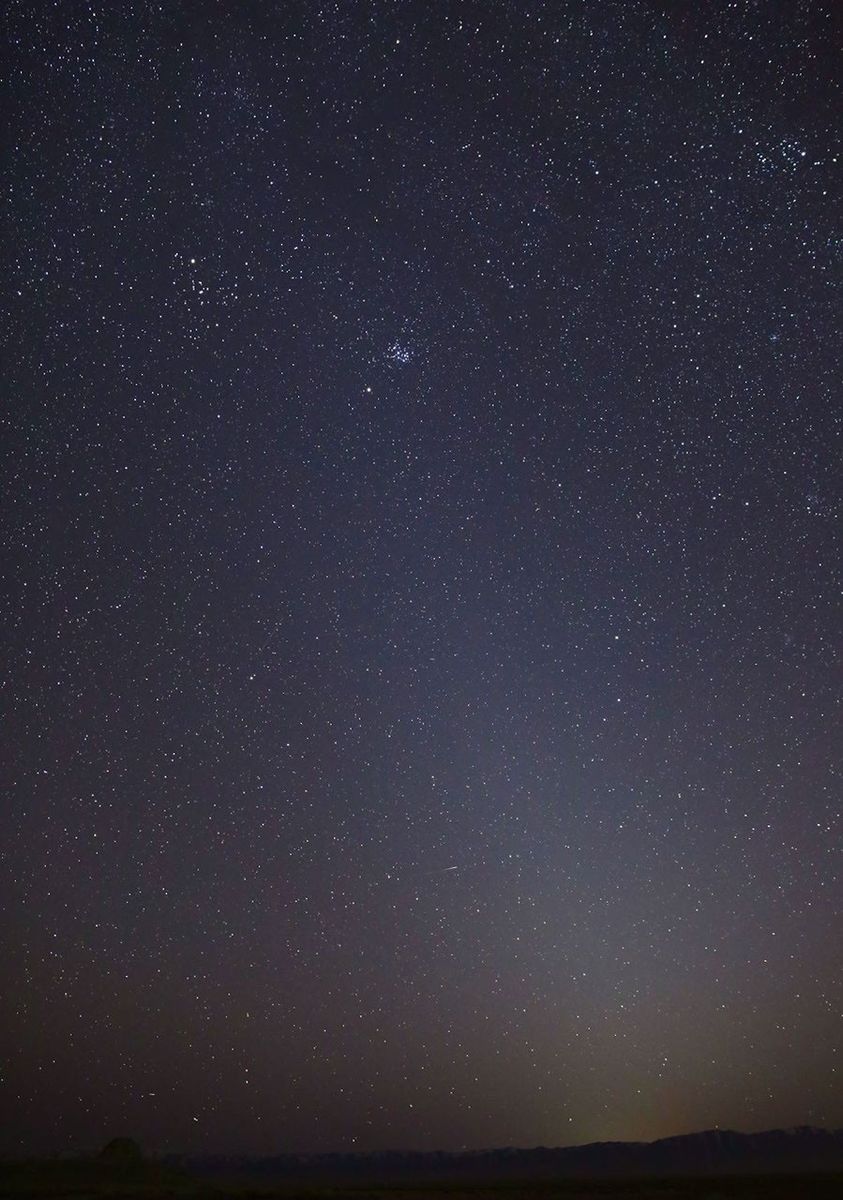
Under a truly dark sky, the horizon can glow even when sunrise is still far away. This faint wedge or band is zodiacal light, sometimes called the false dawn.
The glow comes from sunlight scattered by tiny particles of dust spread through the inner Solar System. It is easiest to notice when moonlight and city lights are absent.
What zodiacal light actually is
Zodiacal light is a broad glow produced when sunlight is scattered by dust concentrated near the plane of the Solar System.
Why it forms a long band
Most planets and much of the interplanetary dust orbit near the ecliptic plane. The glow therefore follows the zodiac across the sky rather than appearing randomly.

Why dark-sky locations matter
The zodiacal glow is faint. Light pollution, bright moonlight and haze can easily hide it, which is why remote high-altitude sites offer much better views.
What appeared in the 2026 Hanle image
NASA’s APOD description identifies bright Jupiter low in the glow, Mars higher in the frame and open star cluster M44 along the zodiacal band.
Where the dust may come from
Interplanetary dust has several possible sources. NASA’s Juno measurements have also suggested that Mars may contribute dust that helps create part of the zodiacal light.
FAQ
Is zodiacal light the same as sunrise?
No. It can appear well before dawn or after evening twilight and is caused by scattered sunlight from interplanetary dust.
Can it be seen without a telescope?
Yes, from sufficiently dark locations under good conditions.
Where should I look?
Look along the ecliptic after evening twilight or before morning twilight, depending on the season and hemisphere.
Why is it difficult to see from cities?
Artificial skyglow is often much brighter than zodiacal light.