
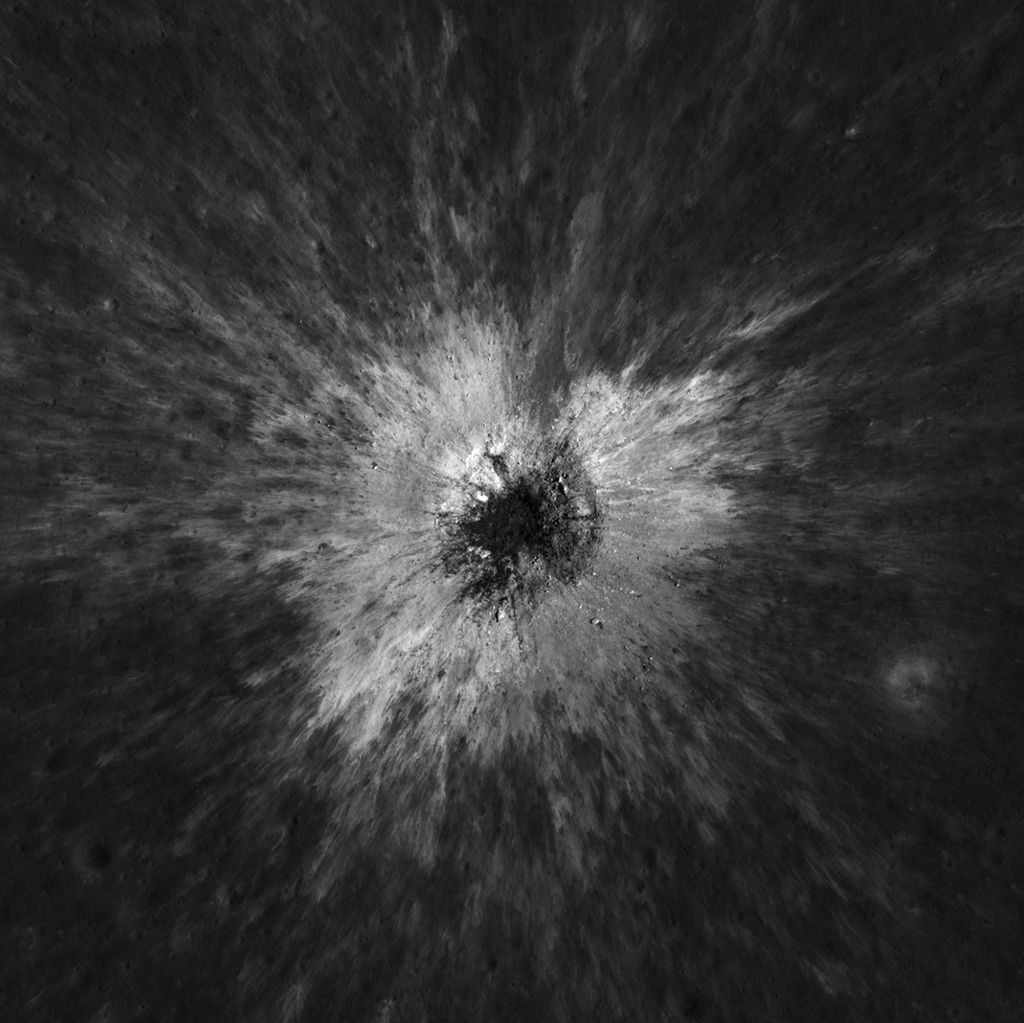
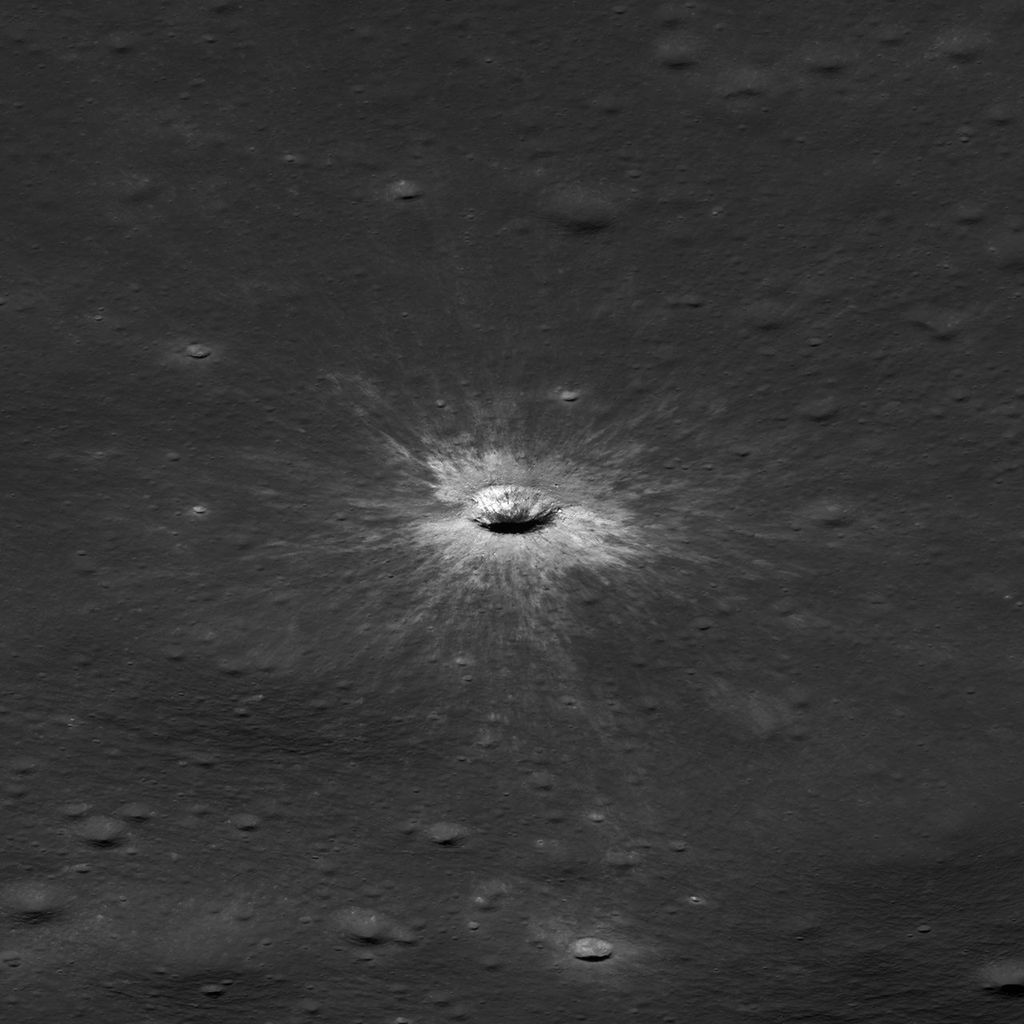
NASA’s Lunar Reconnaissance Orbiter found McGetchin crater, a 728-foot-wide impact scar formed in 2024 and surrounded by a surprising nighttime cold spot.
A routine check that turned into a major discovery
Robert Wagner, an image-processing specialist working with the Lunar Reconnaissance Orbiter Camera team, was checking a global change map when he noticed an unusually large bright patch surrounded by a dark halo. The software compares observations made at different times and highlights places where the surface appearance changed.
Wagner then compared older and newer frames and confirmed that the pattern was associated with a newly formed impact crater. The feature was later named McGetchin crater after lunar scientist Tom McGetchin. The discovery demonstrates why repeat mapping matters: a spacecraft can turn the Moon into a time-lapse science target rather than a static atlas.
Scientists narrowed the impact to a six-week window
Archived LRO images allowed researchers to bracket the event between April 11 and May 22, 2024. That unusually precise window is possible because the orbiter repeatedly photographs the same regions. An image taken before the change sets one boundary; the first image showing the new feature sets the other.
The impactor is estimated to have been roughly the size of a three- to six-story building. With essentially no thick atmosphere to slow or burn up incoming rocks, the Moon takes impacts directly at cosmic speeds.
How large is McGetchin crater?
The fresh crater is about 728 feet wide and 141 feet deep. NASA describes the width as roughly two football fields. For a newly formed crater discovered in modern orbital datasets, that is exceptionally large, which is why researchers characterize an event of this scale as occurring roughly once a century or even less often.
Most of the new impacts found by LRO are much smaller. Across its mission, the team has identified at least 1,000 new craters and flagged many more surface changes caused by impact debris. McGetchin sits at the extreme end of that modern record.
The impact changed temperatures far beyond the rim
After the crater was recognized in visible-light imagery, scientists used LRO’s Diviner thermal instrument to examine the area at night. They found a cold region around four miles wide that is about 16 degrees Fahrenheit cooler than its surroundings during lunar night.
The explanation is physical rather than chemical: an impact churns and fluffs the regolith, lowering its bulk density and changing the way it stores and releases heat. The cold signature extends much farther than the crater itself, showing that an impact can modify the mechanical and thermal character of a broad area.
Why LRO needed both wide and narrow views
The Wide-Angle Camera is ideal for mapping broad swaths of terrain and finding changes over large areas. Once McGetchin was detected, the Narrow-Angle Cameras could examine it at roughly meter-scale resolution, revealing the rim, floor, ejecta rays and surrounding surface.
That two-stage workflow is powerful: wide surveys find the unexpected, and targeted high-resolution observations measure the details. It is the same logic used across astronomy, where survey telescopes discover objects and specialized instruments follow them up.

A reminder that the Moon is still changing
The Moon lacks rain, oceans and active plate tectonics, so ancient craters can survive for billions of years. But “quiet” does not mean unchanging. Meteoroids, asteroids and comet fragments continue to strike the surface, slowly gardening the regolith and occasionally producing large fresh craters.
Because fresh impacts expose material and alter surface roughness, temperature and soil density, they are natural experiments. Studying them helps planetary scientists understand crater formation processes that also operated throughout the early Solar System.
Why this matters for future surface exploration
Impact-modified regolith can behave differently under wheels, footpads and excavation equipment. A broad region of loosened soil around a young crater could therefore matter to future rover mobility or local engineering models, even if the crater itself is avoided.
LRO data are already used to characterize illumination, terrain, temperature and resources. Discoveries such as McGetchin add a time dimension to those maps and remind mission planners that the lunar surface continues to receive new scars.
FAQ
Did astronomers watch the impact happen?
No. The crater was found later by comparing images. The observation sequence constrains when it formed.
Is McGetchin the largest crater on the Moon?
No. Ancient lunar basins are vastly larger. It is notable as an unusually large newly formed crater identified in modern repeated orbital imagery.
Why is the surrounding area colder at night?
The impact loosened and fluffed the regolith, making it less effective at retaining heat during lunar night.
Official sources & further reading
- NASA Science — Moon Orbiter Spots New, Once-in-Century Moon Crater
- NASA Science — Lunar Reconnaissance Orbiter
- NASA Science — Moon Mosaic
Image credits are shown with each image. External source links open official NASA, ESA/Hubble or Chandra pages.