
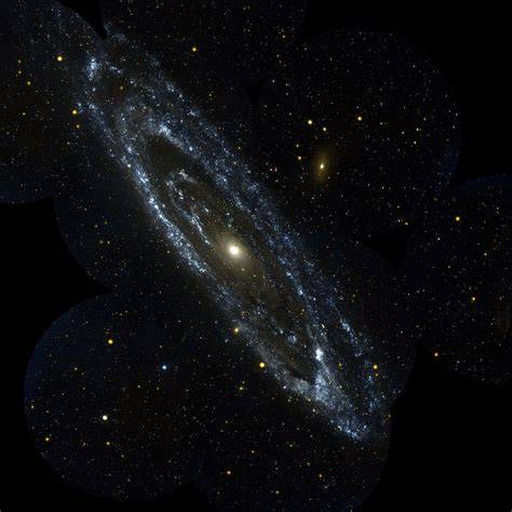
The Milky Way is our home galaxy — the enormous system that contains the Sun, Earth and every planet we know directly. Understanding it helps put our Solar System into a much bigger cosmic context.
What the Milky Way is
The Milky Way is the galaxy that contains the Sun, Earth, and our entire Solar System. It is a vast collection of stars, gas, dust, planets, stellar remnants and dark matter held together by gravity.
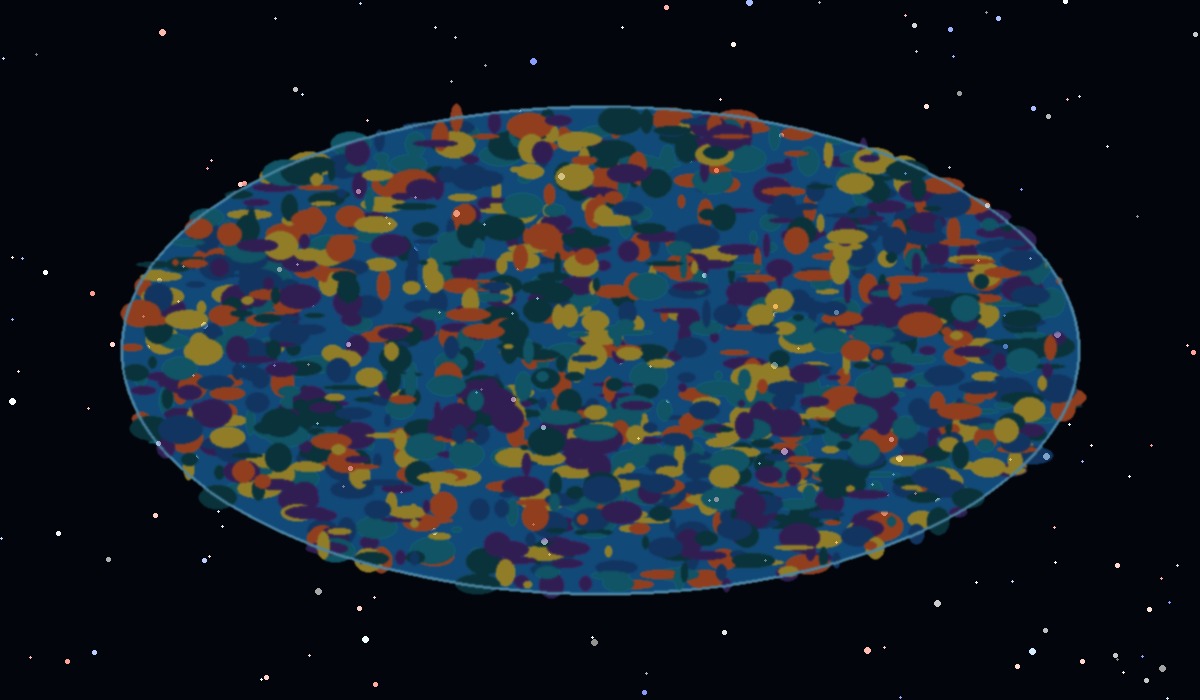
Why it looks like a band in the night sky
We live inside the Milky Way's disk. When we look along the plane of that disk, we see the combined light of enormous numbers of distant stars together with dark lanes of interstellar dust, creating the familiar cloudy band.
A barred spiral galaxy
The Milky Way has a central bar of stars and several spiral arms extending through its disk. Our Solar System lies in a smaller structure often called the Orion Spur, far from the galactic center.
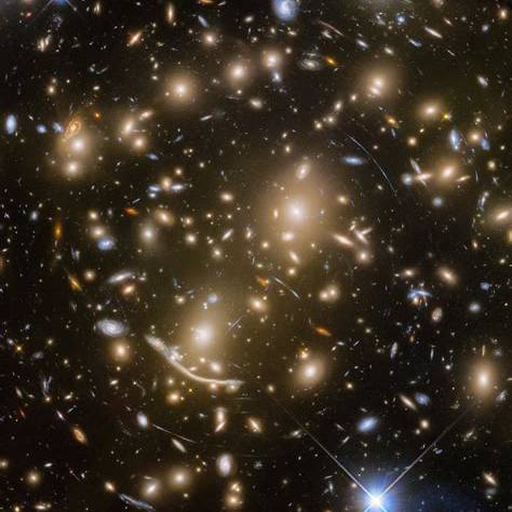
What is at the center?
At the heart of the Milky Way lies a compact radio source associated with a supermassive black hole known as Sagittarius A*. It contains millions of times the mass of the Sun.
How large is the galaxy?
The stellar disk is roughly one hundred thousand light-years across, while the surrounding halo extends much farther. Even at the speed of light, crossing the visible stellar disk would take about one hundred thousand years.
That scale is hard to imagine, which is why the Milky Way is such a useful bridge between the familiar night sky and modern astrophysics.
FAQ
Can we photograph the Milky Way from outside?
No. Because we live inside it, most direct images of spiral structure are reconstructions or comparisons with similar galaxies.
Is the Sun near the center of the Milky Way?
No. The Solar System lies far from the galactic center in a smaller spiral feature known as the Orion Spur.
What is Sagittarius A*?
It is the supermassive black hole at the center of our galaxy.