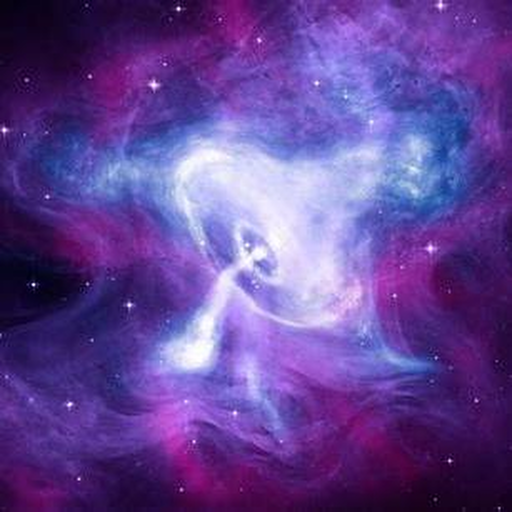
At the center of the Milky Way, stars are packed so tightly that the sky looks less like a collection of individual suns and more like a glowing river. In 2026, the European Space Agency released a remarkable Euclid view of this crowded region: a huge mosaic containing more than 60 million stars. The image is beautiful on its own, but its scientific value goes far beyond a postcard of the galactic center.
Euclid was built primarily to study the large-scale structure of the Universe and the effects associated with dark matter and dark energy. Yet its wide field of view and sharp visible-light camera also make it unusually good at surveying dense regions of our own galaxy. A single Euclid pointing covers an enormous area compared with many high-resolution space observatories, so the telescope can map crowded star fields while still separating individual sources.
What exactly did Euclid photograph?
The target was the galactic bulge, the dense central region of the Milky Way. From our position in the galaxy’s disk, we look toward that center through spiral arms, dark molecular clouds, foreground stars, glowing gas and enormous amounts of dust. That is why the picture contains both glittering concentrations of stars and dark patches that appear almost empty. Those dark patches are not holes in the galaxy; they are clouds of dust blocking light from stars behind them.
According to ESA’s image release, the observation was made on March 23, 2025 as a mosaic of nine Euclid pointings. The public color version combines Euclid’s very sharp visible-light data with color information from the Canada-France-Hawai‘i Telescope.
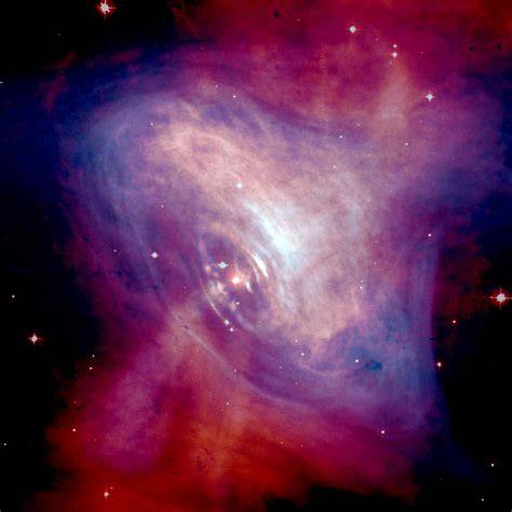
How gravitational microlensing can reveal planets
Most exoplanet searches rely on a repeating signal. A planet may pass in front of its star and slightly dim it, or the planet’s gravity may make the star wobble. Microlensing is different. It depends on a chance alignment between a foreground object and a more distant background star.
Einstein’s general theory of relativity tells us that mass bends space-time. When a nearer star passes almost directly in front of a distant star, the foreground star’s gravity can bend and magnify the background starlight. If the nearer star has a planet, that planet adds its own small distortion to the brightening pattern. The event may happen only once, which makes detailed follow-up extremely important.
This technique is especially valuable because it can find planets at wider orbital distances and can detect cold worlds that are harder to discover with methods biased toward close-in planets. ESA notes that nearly 300 exoplanets had already been discovered by microlensing from ground-based telescopes, and Euclid’s bulge field contains many systems that future surveys can revisit.
Why Euclid and NASA’s Roman telescope make a powerful combination
NASA’s Nancy Grace Roman Space Telescope is designed to carry out a dedicated survey of the galactic bulge for microlensing planets. Euclid’s earlier snapshot gives astronomers a time baseline. Years later, when Roman sees a microlensing event, researchers can compare the positions and motions of the stars with the Euclid image. That extra time separation can help disentangle the foreground lens star from the background source.
The result is potentially more than a simple “planet found” announcement. By measuring relative motion and combining multiple observations, astronomers can improve estimates of the planet’s mass and the properties of its host star. For readers following future discoveries on Neela Asman, this is an important idea: one space telescope can make another telescope’s results more precise even when the two missions were designed for different primary goals.
What else is hidden in this star field?
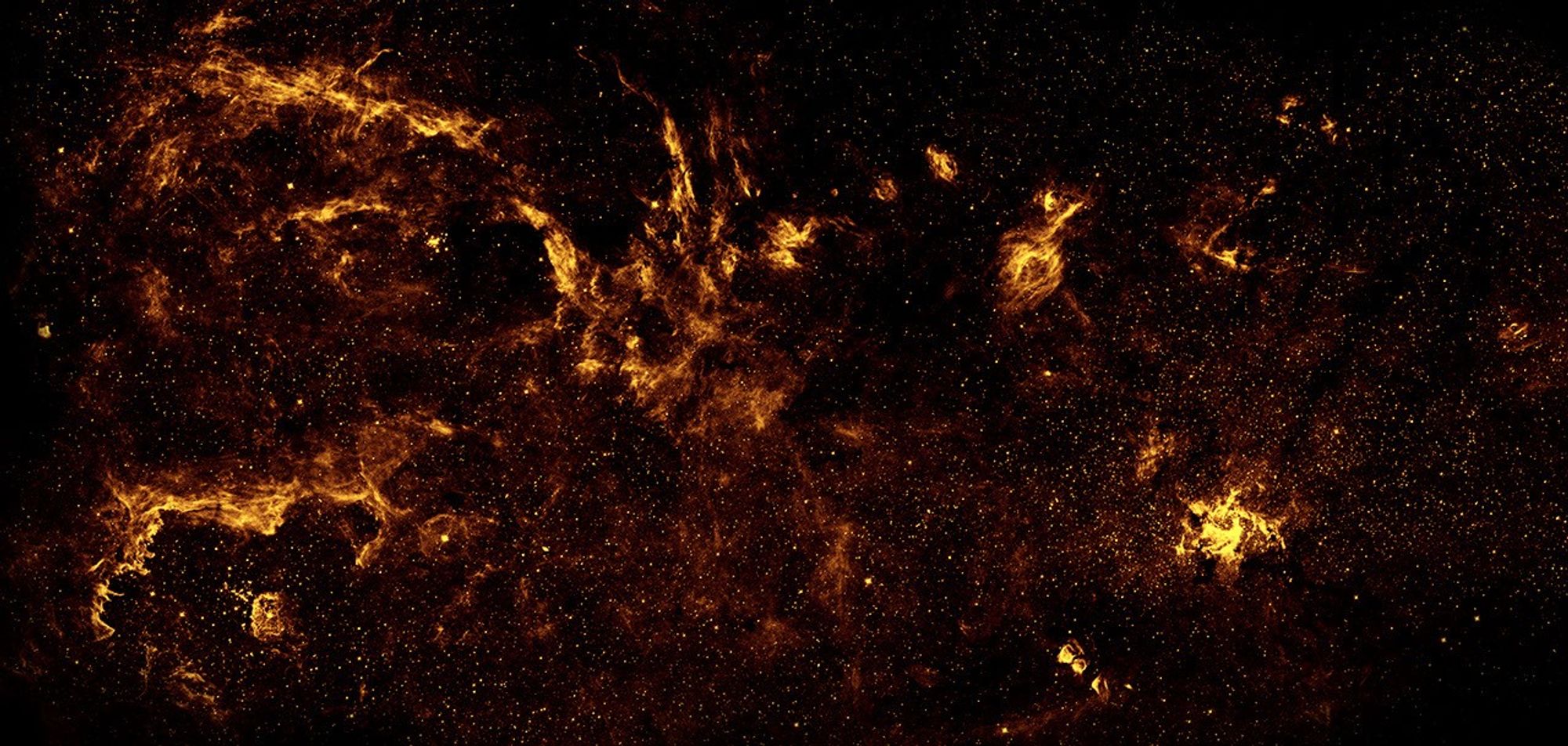
The mosaic is also a record of stellar populations, dust structures and star-forming regions. The bulge contains many old stars, but the line of sight toward the center crosses younger populations in the galaxy’s spiral arms. Newly formed hot stars can ionize surrounding hydrogen, while molecular clouds create dark silhouettes against the brighter background.
Researchers can use such a wide image to study proper motion, binary stars, brown dwarfs and the distribution of dust. In other words, the same dataset that helps planet hunters also becomes a map for stellar astronomy and galactic archaeology.
The bigger astronomy story
Modern astronomy increasingly depends on combining observatories rather than expecting one telescope to answer every question. Euclid provides wide, sharp surveys. Roman will repeatedly monitor selected dense fields. Hubble offers decades of precision imaging, while Webb adds extraordinary infrared sensitivity. Together, these missions allow astronomers to connect a short-lived event to years of prior and future measurements.
For the public, the Euclid bulge image is also a reminder of scale. Every tiny point in the mosaic is part of the same galaxy that contains our Sun, yet the center is roughly 26,000 light-years away. The image compresses a staggering number of stars into a single frame—and still represents only a small fraction of the Milky Way.
What to watch next
The most interesting follow-up will come when future microlensing events occur in the same region. Astronomers will be able to reach back to Euclid’s earlier observations and compare positions over time. The data may help confirm planets that would otherwise remain uncertain and improve measurements for cold worlds located far from their host stars.
Keep an eye on the ESA Euclid mission and NASA’s Roman mission updates. The story of this image is not finished; its real value may grow as more years of observations are added.
FAQ
Did Euclid discover 60 million planets?
No. The mosaic contains more than 60 million stars. Its main exoplanet value is that it can support future microlensing measurements and mass estimates.
Is the dark material in the picture empty space?
Mostly no. Many dark regions are dense clouds of dust that block visible light from the bright galactic bulge behind them.
Why is microlensing useful?
It can detect planets that are difficult to find with other techniques, including colder planets at wider orbital distances.