A telescope helps us study objects that are too distant or faint to see clearly with our eyes alone. Its most important job is to collect light and bring it into focus. The image may be viewed through an eyepiece, recorded by a camera, or measured by a scientific detector.
Telescopes do not make distant objects physically larger. They gather light from a small patch of sky and form an image that lets us see detail, measure brightness, and analyze the light coming from stars, planets, nebulae, and galaxies.
How a telescope collects light
Light from a distant object arrives at a telescope as a bundle of rays. The objective lens or primary mirror gathers that light and directs it toward a focus. An eyepiece can magnify the resulting image for a person to view, while a camera or scientific instrument can record the light for later analysis.
A larger main lens or mirror collects light over a larger area. This makes faint objects easier to detect and can help reveal finer details when the optics, detector, and observing conditions allow it. That is why professional observatories often prioritize large mirrors.
Refracting and reflecting telescopes
A refracting telescope uses a lens to bend incoming light toward a focus. A reflecting telescope uses a curved mirror to reflect and focus light. Both designs can produce useful images, but each has practical trade-offs in size, cost, alignment, and optical performance.
Large research telescopes commonly use mirrors because mirrors can be supported from behind and built much larger than practical lenses. Reflecting designs also avoid the color-fringing effect that can occur when a lens focuses different wavelengths by slightly different amounts.
Magnification is not the whole story
Magnification describes how large an object appears through the telescope, but it does not create new information. Excessively high magnification can make an image dimmer, shakier, or blurrier. The useful magnification depends on aperture, optical quality, atmospheric conditions, focus, and the object being observed.
For beginners, a stable mount and easy setup can matter more than a very high magnification number printed on a box. A telescope that is used regularly under good conditions will generally be more rewarding than one that is difficult to aim or keep steady.
Why astronomers use different wavelengths
Visible light is only one part of the electromagnetic spectrum. Radio waves, infrared, ultraviolet, X-rays, and gamma rays can reveal different physical processes. Telescopes and detectors are designed for particular wavelength ranges, so no single observatory can observe everything equally well.
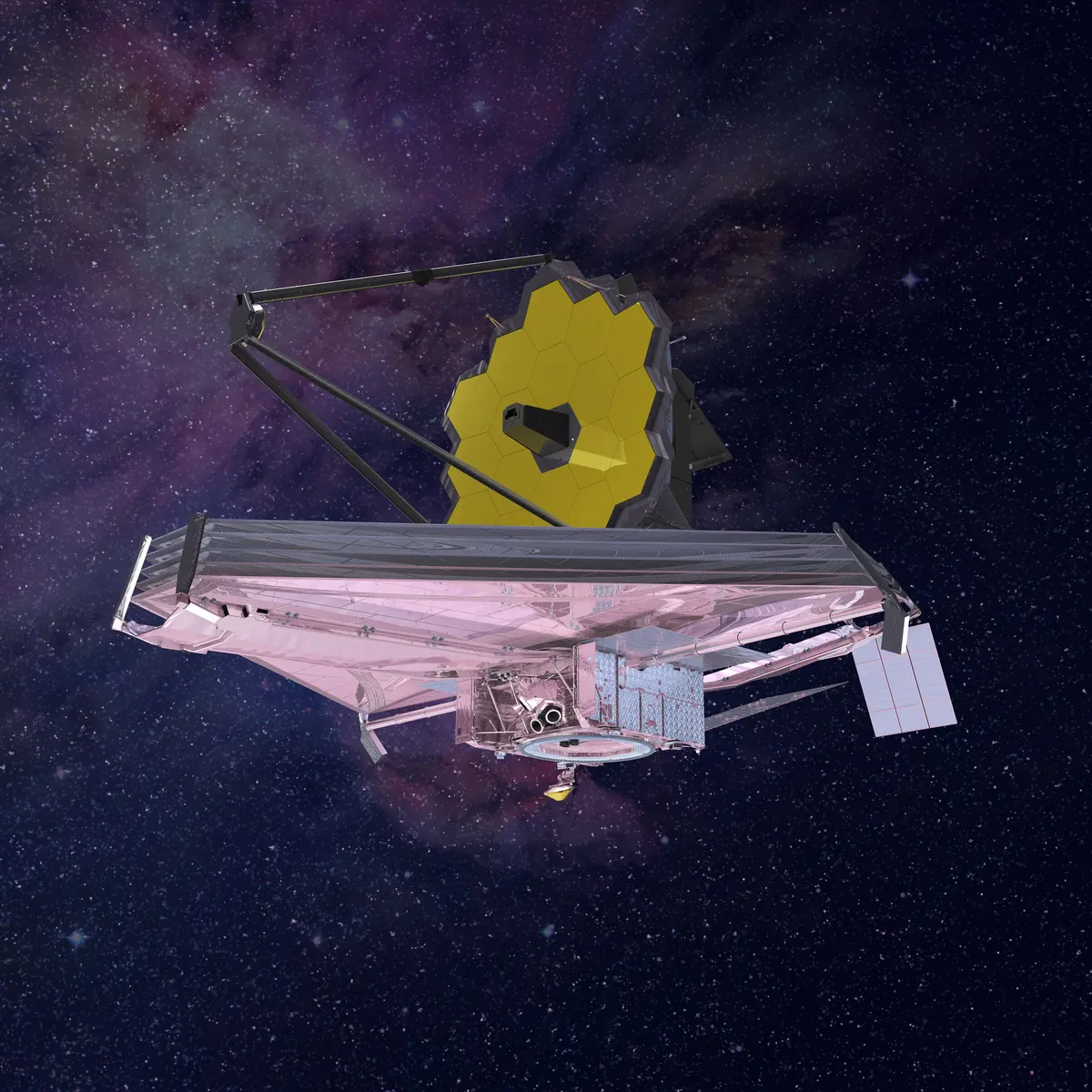
Infrared observatories such as the James Webb Space Telescope can study cool objects, dust-shrouded regions, and very distant galaxies whose light has been stretched to longer wavelengths. Other observatories are designed for visible light, radio waves, or high-energy radiation.
Space telescopes and ground observatories
Ground-based telescopes can be extremely large and are easier to maintain, but the atmosphere can blur images, weather interrupts observations, and city lights make faint targets harder to see. Some wavelengths are absorbed by the atmosphere before they reach the ground.
Space telescopes avoid much of the atmospheric distortion and can observe wavelengths blocked by Earth’s atmosphere. However, they are expensive to launch and difficult to repair. Astronomers often combine observations from space and ground facilities to get a more complete picture.
Choosing a telescope for beginners
Binoculars are a useful first step: they are portable, easy to point, and provide a wide view of the sky. If you choose a telescope, look for a steady mount, a practical aperture, straightforward controls, and accessories that are easy to replace. Consider where you will observe and how often you will carry the instrument.
Before buying, try to visit a local astronomy club or public observing night. Seeing several telescope types in use can help you decide what fits your interests, budget, and observing location.
Frequently asked questions
Do telescopes make objects bigger?
They make an image appear larger and collect more light than the unaided eye. Their ability to show fine detail also depends on aperture, optical quality, and observing conditions.
Are reflecting telescopes better than refracting telescopes?
Neither design is best for every situation. Reflectors are common in large research observatories, while refractors can be compact and convenient for some beginner uses.
Why are some telescopes placed in space?
Space telescopes avoid atmospheric blurring and can observe wavelengths that Earth’s atmosphere blocks or absorbs. Ground telescopes still provide many advantages, including size and easier maintenance.
What should a beginner prioritize?
Choose a telescope with a stable mount, usable aperture, and a setup you can manage. High magnification claims alone are not a reliable guide to image quality.