

Stars are not permanent. They form from cold clouds, spend most of their lives generating energy through nuclear fusion, and eventually change dramatically as their fuel supply and internal structure evolve.
Stars begin in clouds of gas and dust
A star forms when part of a cold molecular cloud collapses under gravity. As material falls inward, the center becomes hotter and denser until nuclear fusion begins.
Large star-forming regions contain stars at different ages, so astronomers can compare many stages of early stellar evolution in one place.
The long main-sequence stage
For most of a star's life, hydrogen fusion in the core releases energy that balances gravity. The Sun is currently in this stable main-sequence phase.
More massive stars consume their fuel much faster than lower-mass stars, so they can have far shorter lifetimes even though they begin with more material.
What happens when core hydrogen runs low
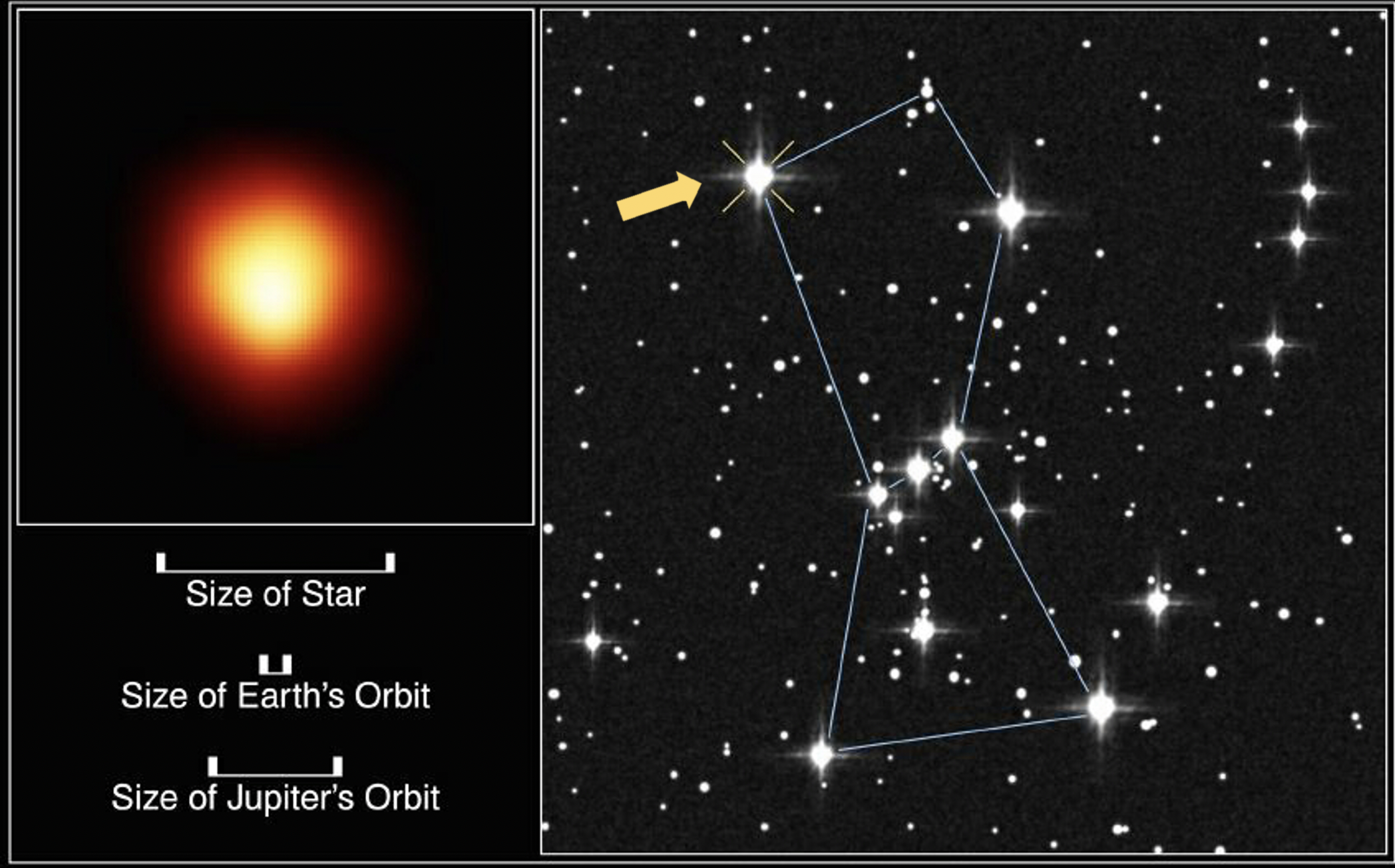
The balance changes as the core composition evolves. A Sun-like star expands into a red giant, while more massive stars can become enormous supergiants and fuse a wider range of elements.
These later stages are shorter and more complex than the long main-sequence phase.
The fate of lower-mass stars
A star similar to the Sun eventually sheds its outer layers. The hot core left behind becomes a white dwarf, a compact object that slowly cools over extremely long timescales.
The expelled material can enrich interstellar space and later become part of new stars and planets.

The fate of massive stars
Massive stars can end in core-collapse supernovae. The collapsed remnant may become a neutron star or, if enough mass remains, a black hole.
The explosion also throws newly formed elements into space, helping enrich future generations of stars, planets and eventually the raw material for life.
FAQ
Do all stars become supernovae?
No. Lower-mass stars such as the Sun are expected to end as white dwarfs rather than explode in core-collapse supernovae.
Why do massive stars live shorter lives?
They burn through nuclear fuel much faster because their cores are hotter and more energetic.
Can a supernova leave behind a black hole?
Yes. Depending on the mass and details of the collapse, the remnant can become a neutron star or a black hole.