

Uranus has a narrow, dark ring system that looks dramatically different from Saturn’s. Voyager 2 discovered fine detail, and Webb has now revealed the rings with remarkable infrared sensitivity.
Uranus surprised astronomers with a ring system
The rings of Uranus were discovered in 1977 when astronomers watched a star pass behind the planet. The star dimmed several times before and after the main occultation, revealing narrow bands of material surrounding Uranus.
Voyager 2 later photographed the system directly during its 1986 flyby and added important detail about ring widths, dust and small moons.
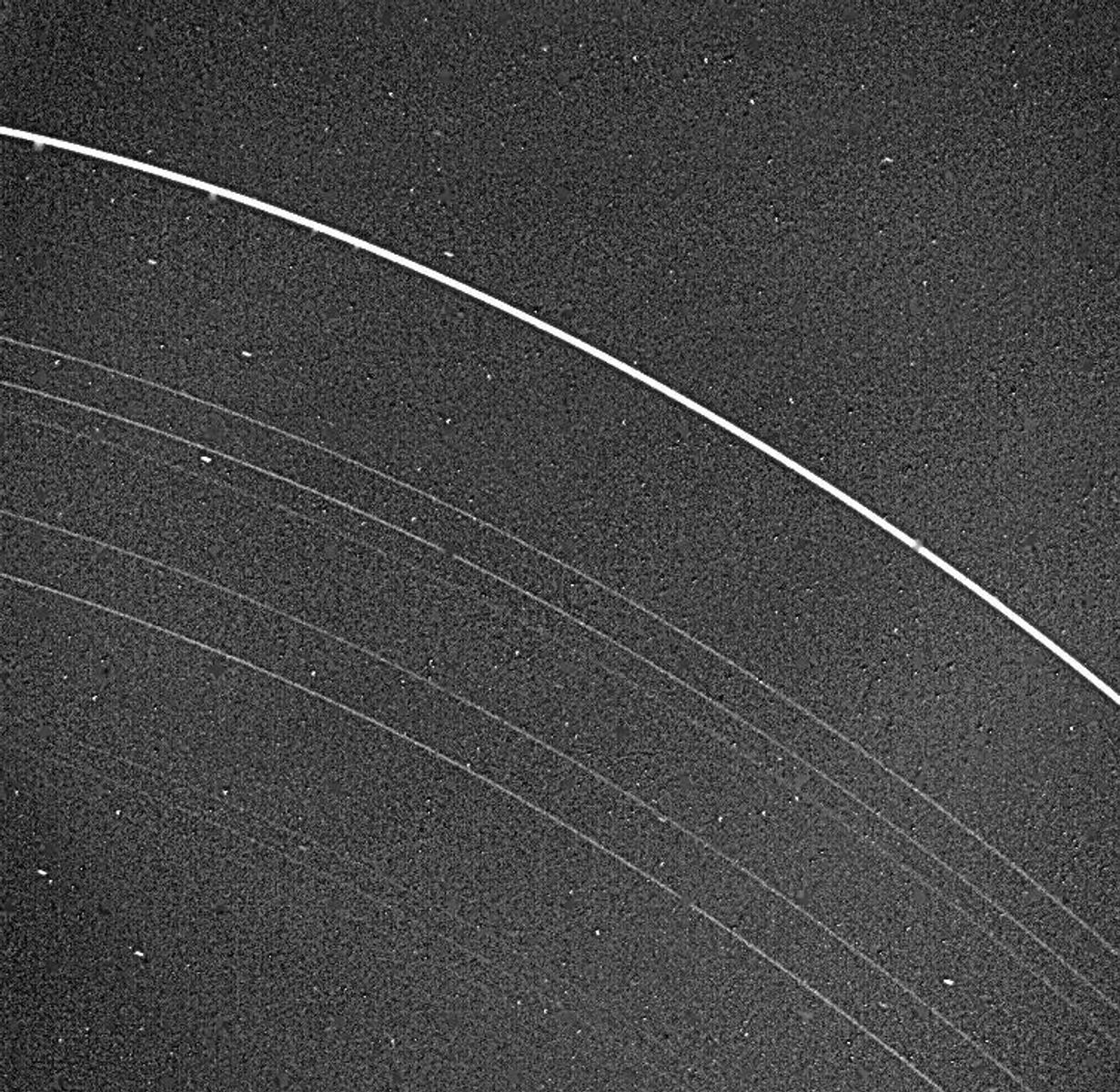
How Uranus’s rings differ from Saturn’s
Saturn’s bright rings are broad and rich in reflective water ice. Uranus’s main rings are much narrower and darker. They contain larger particles as well as fine dust, and some rings have sharp edges that suggest gravitational interactions with nearby moons.
The entire system is also viewed in unusual orientations because Uranus rotates on its side, with an axial tilt of about 98 degrees.
What Voyager 2 revealed
Voyager 2 remains the only spacecraft to have visited Uranus. Its cameras photographed the rings from many angles, including backlit geometries that made tiny dust grains much easier to see.
The flyby also discovered small moons and measured the planet’s atmosphere and magnetic environment. Those observations still provide the baseline for nearly every modern study of the Uranian system.
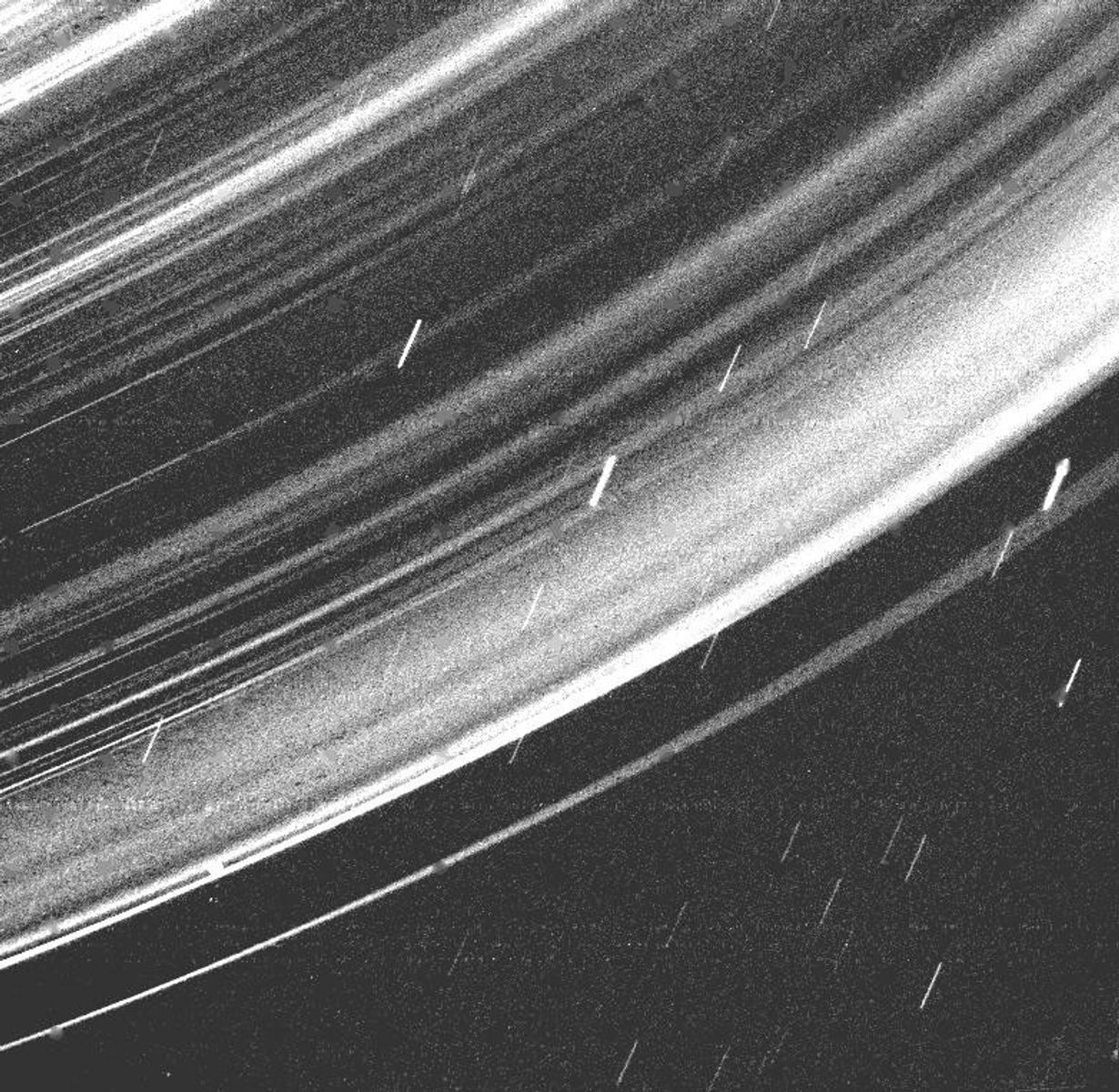
Why Webb can see the rings so clearly
Webb observes infrared wavelengths and has exceptional sensitivity. In modern images, multiple rings appear around the pale blue planet, including faint dusty structures that are difficult to detect in ordinary visible-light images.
Webb also reveals atmospheric features such as the bright polar cap and clouds, letting scientists study the planet and rings at the same time.
Where did the rings come from?
The exact history of Uranus’s rings is still uncertain. One possibility is that they formed from material produced when small moons collided or were disrupted. Impacts can continually create fresh dust, while gravity from moons can shape or confine ring edges.
Future missions could determine particle composition, map tiny moons and measure the ring system at much higher resolution, helping scientists reconstruct how the system evolved.
FAQ
Why is Uranus Has Rings Too important?
It gives scientists a direct way to study how planets, moons or small bodies evolve and how conditions across the Solar System can differ dramatically.
Are these images real spacecraft or telescope observations?
Yes. The article uses real NASA spacecraft or telescope imagery and credits the mission or observing team in each caption.
Does this discovery prove life exists elsewhere?
No. Planetary discoveries can identify environments, chemistry and processes that are relevant to habitability, but evidence for life requires much stronger and more specific measurements.