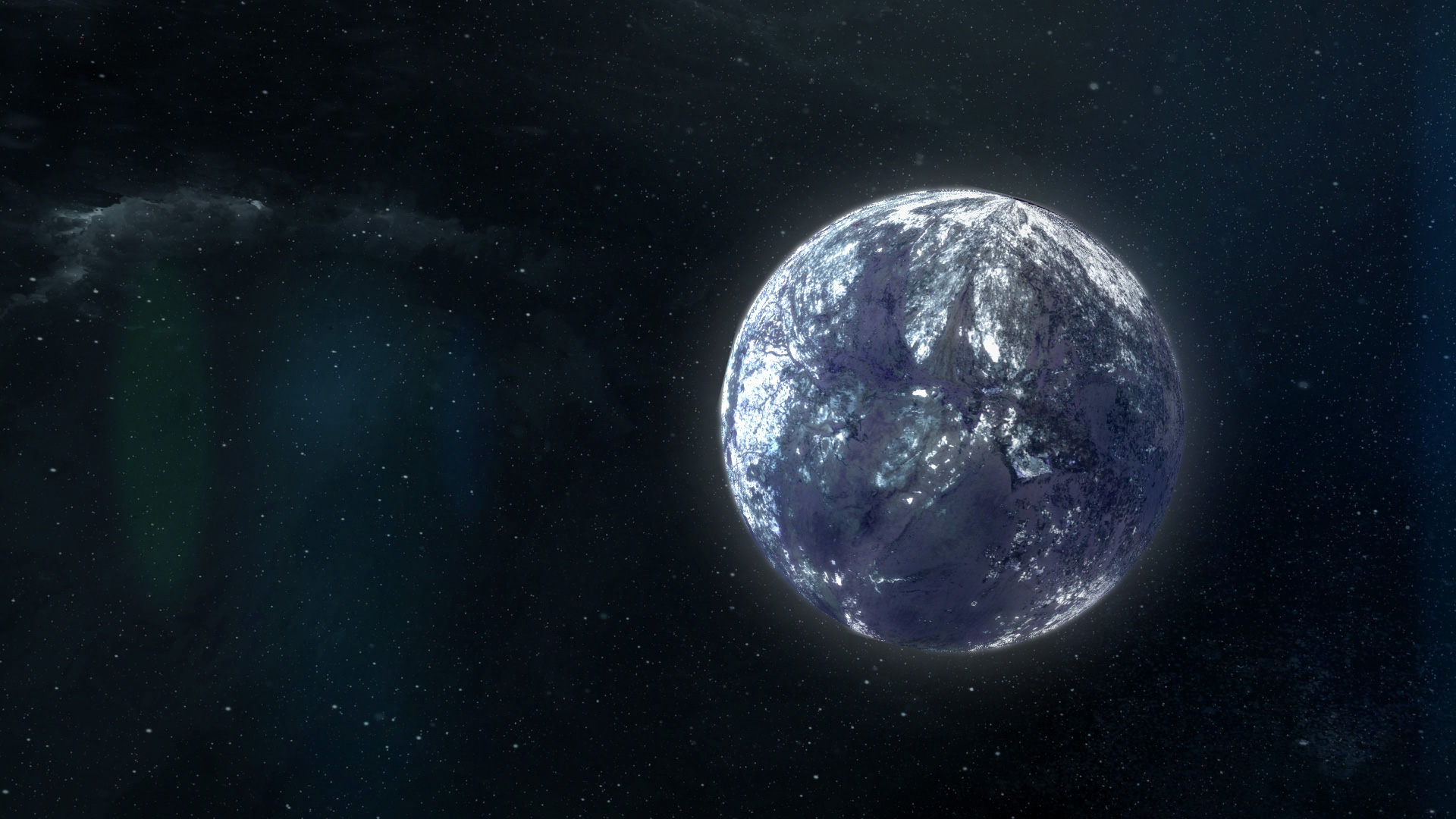
Most planets we know are tied to stars. Earth orbits the Sun, and thousands of confirmed exoplanets circle distant suns of their own. But gravity is messy during the formation of planetary systems. Some worlds can be scattered onto extremely wide paths or thrown out entirely, leaving them to move through the galaxy without a host star.
These objects are often called rogue planets or free-floating planets. They are difficult to find because a planet with no nearby star receives little or no starlight to reflect. A young massive rogue may glow faintly with leftover heat, but colder and smaller worlds can be nearly invisible. Astronomers therefore rely on gravity itself to reveal them.
How a planet can become unbound
Planetary systems form inside rotating disks of gas and dust around young stars. As multiple growing planets interact, their gravity can rearrange the system. Close encounters can push one planet inward, move another outward or, in an extreme case, accelerate a world beyond the escape speed of its star.
Other formation routes may also produce isolated planetary-mass objects, especially near the boundary between planets and brown dwarfs. Because astronomers classify objects partly by formation history and partly by mass, the population of free-floating worlds can include bodies with different origins.
Why rogue planets are so difficult to see
A normal exoplanet benefits from a bright reference point: its star. Astronomers can detect a transit, measure a stellar wobble or sometimes image the planet beside the star. A rogue planet removes that anchor. There may be no regular orbit, no repeating transit and almost no reflected light.
Young giant rogue worlds can radiate infrared energy left from formation and contraction, making them easier to identify in nearby star-forming regions. But old, low-mass rogues cool with time. For those objects, a technique that does not depend on the planet’s own brightness is essential.
How gravitational microlensing finds an invisible world
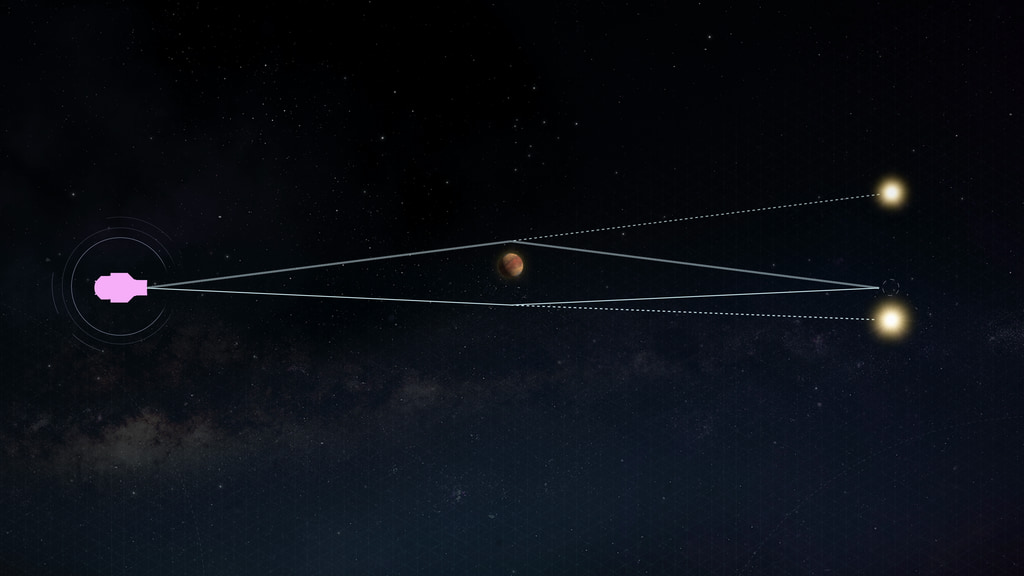
Einstein’s general relativity predicts that mass bends space-time and therefore bends the path of light. If a foreground planet passes almost exactly in front of a distant background star, the planet’s gravity can act like a tiny lens. To an observer, the background star briefly appears brighter.
The alignment is temporary and usually does not repeat. The duration and shape of the brightening carry information about the lensing object. A short event with no detectable host-star signature can indicate a free-floating planetary-mass lens, although careful analysis is needed to rule out alternatives.
What astronomers can and cannot infer from one event
Microlensing is powerful because it can reveal objects that emit almost no light, but a single event does not automatically provide every property. The signal depends on the lens mass, distances and relative motion, and some of those quantities can be degenerate.
Extra information can help. Observations from different locations can measure parallax effects, high-resolution imaging years later can search for a host star, and statistical samples can constrain the overall mass distribution. That is why a large systematic survey is more informative than a handful of isolated discoveries.
Why the Roman Space Telescope is important
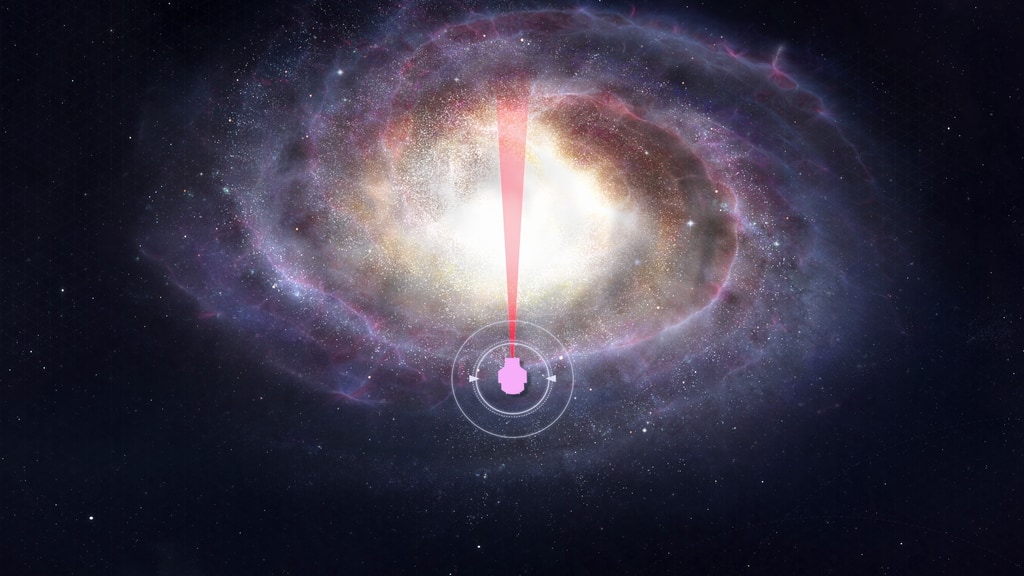
NASA’s Nancy Grace Roman Space Telescope has a wide field of view and Hubble-like angular resolution. Its Galactic-bulge survey is designed to monitor huge numbers of stars repeatedly, creating a rich microlensing dataset.
NASA visualizations show how a rogue planet would briefly amplify a background star during a close alignment. Roman’s stable space-based measurements should improve sensitivity to short events and help astronomers measure the population of planets at wide separations as well as worlds that are truly unbound.
What could a starless planet be like?
Without a star, the surface of an old rogue planet would generally be extremely cold. But “cold surface” does not always mean “no internal activity.” Radioactive decay and residual heat can remain inside a planet, and a thick atmosphere or insulating ice could slow the loss of that energy.
These ideas are scientifically interesting but should not be confused with evidence for life. Habitability on a free-floating world would depend on many unknown factors, including mass, composition, atmosphere, internal heat and access to liquid solvents. At present, rogue planets are primarily a formation and population question, not confirmed habitable worlds.
Why counting rogues matters
The number and masses of free-floating planets record how planetary systems form and evolve. If many were ejected, that would tell us that strong gravitational scattering is common. If a large fraction formed in isolation, that would constrain how clouds fragment into very low-mass objects.
Current estimates remain uncertain because the objects are hard to detect and different surveys are sensitive to different mass ranges. A major goal of future microlensing work is therefore statistical: build a large enough sample to determine how common these worlds really are.
FAQ
Do rogue planets orbit the center of the Milky Way?
Yes. Even without a host star, a free-floating planet still moves under the gravity of the Milky Way and other nearby objects.
Can astronomers photograph rogue planets?
Some young, warm, massive isolated objects can be detected directly in infrared light, but colder and lower-mass rogues are extremely faint. Microlensing can reveal them without requiring their own light.
Could Earth be ejected from the Solar System?
A major gravitational disturbance could in principle unbind a planet, but the present Solar System is stable on human timescales. Known rogue planets are not evidence that Earth is about to be ejected.