
NASA’s Nancy Grace Roman Space Telescope is finally in space. The observatory launched on August 30, 2026, aboard a SpaceX Falcon Heavy and began a roughly three-month journey toward the Sun–Earth L2 region, about a million miles from Earth. Roman is built to combine sharp infrared vision with an unusually wide field of view, giving astronomers a way to survey enormous areas of the cosmos without giving up the detail expected from a flagship space telescope.


Why Roman is a major astronomy story in 2026
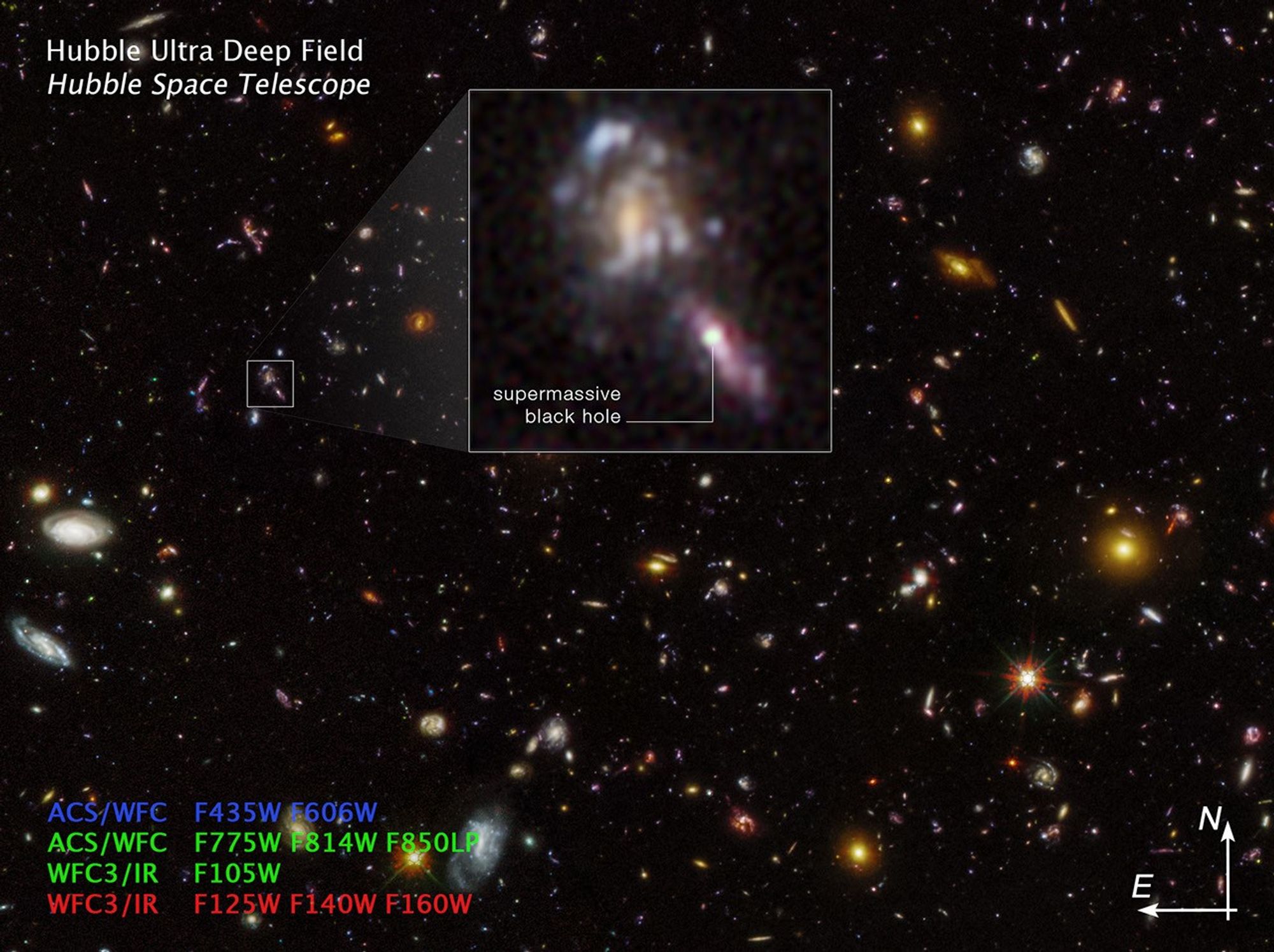
Roman is not simply another telescope pointed at the same targets. Its scientific value comes from scale. Hubble has transformed astronomy with deep, detailed views, while Roman is designed to make broad surveys of the infrared sky much faster. That makes it especially useful for questions that require huge samples: how galaxies are distributed, how cosmic structure changes with time, how common different kinds of planetary systems are, and how often brief events such as gravitational microlensing occur.
The launch itself is only the beginning. After separation from its rocket, Roman entered a commissioning phase on the way toward the second Sun–Earth Lagrange region, commonly called L2. That is also the general neighborhood used by the James Webb Space Telescope. From there, a spacecraft can maintain a useful thermal and observing environment while staying far from the bright, warm Earth.
A telescope built to study the “dark universe”
Two of Roman’s biggest science goals are dark matter and dark energy. Dark matter does not emit light in the ordinary way, but its gravity affects galaxies and bends the path of light from more distant objects. Dark energy is the name astronomers give to the still-unexplained phenomenon associated with the accelerating expansion of the universe.
Roman will attack these problems statistically. By mapping large numbers of galaxies and measuring how matter is distributed over cosmic time, researchers can compare the real universe with competing models. This complements the kind of background explanation in our guide to the mystery of dark energy, but Roman will add a new generation of wide-field observations.
Roman will also hunt for exoplanets
Roman is an astrophysics mission, but exoplanet science is a major part of its program. One important technique will be gravitational microlensing. When a foreground star passes almost directly in front of a more distant star, the foreground star’s gravity can temporarily magnify the background light. A planet orbiting the foreground star can create an additional signal in that brightening pattern.
Microlensing is valuable because it can reveal planets at distances from their stars that are not always easy to probe with the transit method. Readers who want the bigger picture can compare the technique with the methods in our exoplanet hunting guide.
Roman also carries a coronagraph technology demonstration. A coronagraph blocks or suppresses the overwhelming glare of a star so that much fainter nearby objects can be studied. The instrument is intended to demonstrate technologies that could help future missions image and characterize planets more directly.
Why the wide field changes the kind of science Roman can do
Astronomy often faces a tradeoff between depth and area. A telescope can stare at a tiny patch of sky for a long time and see extremely faint objects, or it can scan a wider region and build statistics. Roman is designed to make that tradeoff less severe by pairing a Hubble-class primary mirror with a much wider imaging field.
That means a single survey can contain enormous numbers of galaxies, stars, supernovae and transient events. Researchers will be able to revisit the same regions, compare observations over time, and search for changes. The data set should also become useful for science questions that were not fully anticipated when the mission was designed.
What happens after launch?
First comes travel and commissioning. Teams must verify spacecraft systems, deploy and test hardware, cool and calibrate the instruments, establish precise pointing performance, and confirm that the data pipeline works as intended. Only after those steps can routine science surveys begin.
For readers following the broader 2026 mission calendar, our Space Exploration in 2026 overview provides context for why Roman is one of the year’s most important astrophysics milestones rather than just another launch.
How Roman differs from Hubble and Webb
Roman is often compared with Hubble because the two observatories have primary mirrors of roughly the same diameter, but the way they are designed to survey the sky is very different. Hubble is famous for narrow, exceptionally detailed views. Roman’s Wide Field Instrument is built to cover a much larger area in each pointing while still producing sharp space-based infrared observations. That gives Roman an advantage for projects that need both quality and enormous sample sizes.
Webb, meanwhile, is optimized for extremely sensitive infrared observations of selected targets, including very distant galaxies, star-forming regions and exoplanet atmospheres. Roman will not replace Webb. Instead, the two missions can complement each other: Roman can discover or statistically identify interesting populations across wide fields, while Webb can follow up individual targets in much greater spectral detail. Readers can review the basics in our James Webb Space Telescope explainer.
Why Roman’s data volume is a science story of its own
NASA expects Roman to return an enormous stream of observations. A survey mission that repeatedly images broad parts of the sky creates a different challenge from a telescope that studies a smaller number of targets. Astronomers need automated pipelines to calibrate images, identify changing objects, measure galaxy shapes, classify transient events and distribute data fast enough for the community to use it.
This is one reason machine learning and citizen-science projects are expected to play a role. The most important point is not that software replaces astronomers, but that the scale of Roman’s archive will be too large for people to inspect manually one image at a time. Automated systems can flag unusual events and patterns for researchers to investigate.
Why microlensing could reveal planets other surveys miss
Most well-known exoplanet surveys rely heavily on transits, where a planet passes in front of its star, or radial velocity, where a planet’s gravity causes a star to wobble. Both methods are extremely powerful, but each has selection effects. Microlensing is sensitive to a different part of the planet population and can detect systems that may be difficult to find by repeated transits.
Roman’s planned microlensing survey will monitor dense star fields toward the center of the Milky Way. If a foreground planetary system briefly aligns with a more distant background star, gravity can act like a natural lens. The exact shape of the temporary brightening can reveal the presence of a planet. Combining such results with transit and radial-velocity surveys helps astronomers build a more complete census of planetary systems.
Big questions Roman may help answer
- How is dark matter distributed? Weak gravitational lensing can trace the invisible mass that bends light from background galaxies.
- How has cosmic expansion changed? Large samples of galaxies and supernovae can test models of dark energy.
- How common are planets in wider orbits? Microlensing can probe planetary systems that differ from those favored by transit surveys.
- What changes in the sky over time? Repeated wide-field imaging can reveal supernovae, variable stars and other transient events.
These questions connect Roman directly to several Neela Asman themes, including our dark energy guide, exoplanet hunting guide, and 2026 space mission overview.
From launch to L2: why the journey matters
Roman’s launch was dramatic, but the spacecraft does not begin its main science work immediately after leaving Earth. NASA sent it toward the second Sun–Earth Lagrange region, L2, roughly 930,000 miles (1.5 million kilometers) from Earth in the direction opposite the Sun. Roman is expected to spend about three months traveling and commissioning before settling into its operating environment. L2 is useful because the Sun and Earth remain in roughly the same direction from the spacecraft, which simplifies thermal control, power generation and shielding for sensitive infrared observations.
The trip is also a systems test. Engineers must confirm that power, communications, pointing, propulsion and thermal hardware behave as expected. A flagship observatory can carry excellent instruments and still depend on extremely precise spacecraft performance. During commissioning, teams check those systems before science observations become routine. For readers who want to understand why Lagrange points are used so often in modern astronomy, see our guide to Lagrange points.
What a “statistical census” of planets really means
Roman’s exoplanet program is important because it is designed to measure populations rather than only showcase a few spectacular worlds. Astronomers already know thousands of exoplanets, but the list is shaped by how we find them. Transit surveys are especially good at planets whose orbits happen to line up with our view, while radial-velocity measurements favor planets that produce a detectable gravitational tug on their stars. Microlensing can reach a different population, including planets farther from their stars and systems at large distances in the Milky Way.
A statistical census asks questions such as: How common are Earth-mass, Neptune-mass and giant planets? How often do planets occupy wide orbits? How does the architecture of a planetary system depend on where it formed in the galaxy? The answers are more useful when the survey selection effects are well understood. Roman’s repeated monitoring of dense star fields is intended to give astronomers exactly that kind of population-level information.
Roman as a time-domain astronomy machine
Many astronomical events are valuable precisely because they change. A supernova brightens and fades. A star may vary periodically. A microlensing alignment lasts for a limited time. An active galactic nucleus can fluctuate as matter falls toward a central black hole. Roman’s wide field and repeated surveys make it naturally suited to this “time-domain” view of the universe.
Instead of treating the sky as a collection of static pictures, time-domain astronomy turns it into a movie. Repeated observations allow researchers to compare the same sources across days, weeks, months or years. That can reveal transient events and long-term trends that a single snapshot would miss. The volume of Roman data means automated alert and classification systems will be important for identifying unusual changes quickly.
Why the Coronagraph Instrument matters even as a technology demonstration
Roman’s Coronagraph Instrument is not the mission’s main survey camera. It is a technology demonstration designed to test advanced methods for suppressing a star’s glare so that much fainter objects nearby can be studied. Imaging a planet next to its star is difficult because the star can be millions or billions of times brighter. A coronagraph combines optics, masks and active wavefront control to reduce that glare.
If the demonstration performs well, its lessons will help engineers planning future observatories that aim to directly image and characterize smaller, potentially Earth-like planets. In that sense, Roman is doing two jobs at once: producing major science with its Wide Field Instrument while also testing technologies that may shape the next generation of exoplanet missions.
What astronomy readers should watch for next
The most useful updates after launch will not be marketing milestones but technical ones: successful trajectory corrections, arrival near L2, completion of commissioning, instrument calibration, and eventually the release of first science-quality observations. Each step reduces a different kind of uncertainty. A successful launch proves the observatory reached space; commissioning proves it can operate as a precision scientific instrument.
Once routine surveys begin, the story will shift from the spacecraft itself to the data. Roman is expected to map enormous numbers of galaxies and stars, find transient events, build exoplanet statistics and create a public archive that researchers can reuse for questions far beyond the mission’s headline goals. That is why Roman’s scientific impact will likely grow over time rather than be defined by one “first image.”
Roman Space Telescope: quick questions
- Did Roman replace Hubble or Webb? No. Roman, Hubble and Webb have different strengths and can complement one another.
- Why is Roman so good for surveys? Its design combines sharp space-based infrared imaging with a very wide field of view.
- Will Roman study exoplanets? Yes. Microlensing is a major part of the mission, and the coronagraph will demonstrate direct-imaging technology.
- Why go to L2? The Sun–Earth L2 environment offers favorable geometry for stable power, thermal control and observing.
- What makes the mission especially important? It can connect detailed astrophysics with very large statistical samples, helping scientists test ideas about dark matter, dark energy, galaxies and planetary systems.
What will the Roman Space Telescope study?
Roman will survey dark matter, dark energy, galaxies, transient events and exoplanets while creating a large public infrared data archive.
Where is Roman going after launch?
Roman is traveling toward a halo orbit around the second Sun-Earth Lagrange point, L2, about 1.5 million kilometers from Earth.
Is Roman replacing Hubble or Webb?
No. Roman complements Hubble and Webb by combining sharp space-based infrared imaging with a much wider field of view.
When will Roman start returning science images?
NASA expects commissioning to continue for about three months after launch, with the first science-quality images expected after calibration is complete.
Trusted sources and further reading
Editorial note: This article explains current astronomy research using reputable scientific sources. Findings can be refined as new observations and peer-reviewed analyses become available.